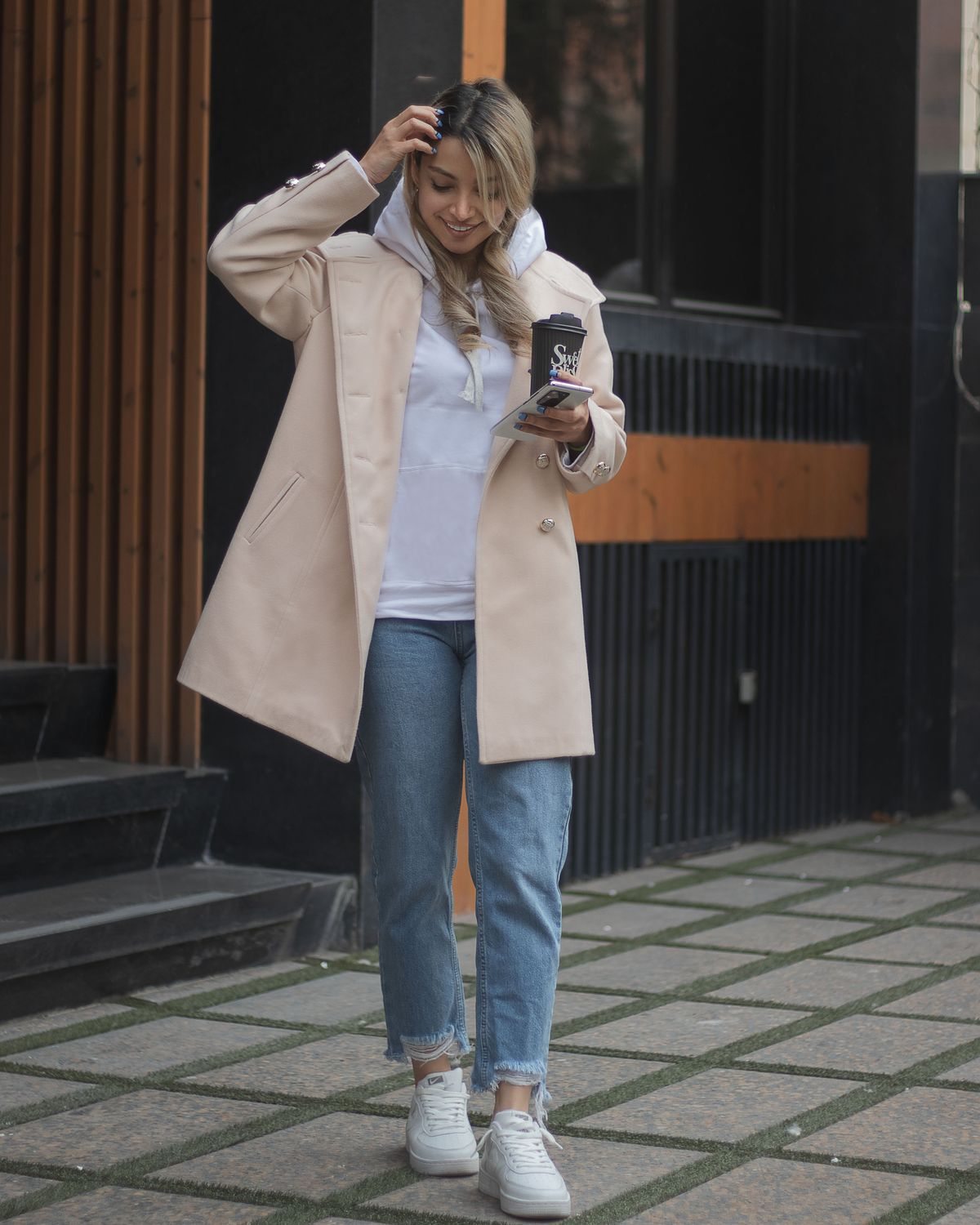
Choose the part that stays on
Start with a base you can wear comfortably indoors and outside for part of the day. That might be a shirt and jeans, a dress or a light knit with trousers. The base should not depend on the coat hiding a neckline or a layer you dislike wearing by itself.
Look at the forecast for the hours you will be out, then consider the actual journey. A brief walk between buildings needs a different response from an afternoon outside. Forecast information helps, but you still need to decide where your clothes will spend their time.
Add one adjustable layer
A cardigan, overshirt or jacket can make a large difference without adding several separate garments. Check that it fits beneath any coat you need. Too many tight sleeves can turn a sensible plan into an uncomfortable stack around the elbow.
A scarf can be useful if it is easy to carry when removed. Choose a size that fits your bag rather than one that fills it. If every layer needs to be tied around your waist by lunchtime, the outfit may have started with too many pieces.
Give the shoes and hem a weather check
Even if the temperature improves, the ground may remain wet. Choose a hem that clears it and footwear suited to your route. A light shoe can feel right in sunshine but be inconvenient for the damp walk to the station.
Keep the colour choices uncomplicated if that makes the layers easier to combine. They need not all match. Repeating one colour or allowing a coat to stand apart can be enough. What matters is that the outfit still feels complete as pieces come off.
Before leaving, try the two most likely versions: fully layered and with the outer layer removed. If both work, you have already solved most of the day. There is little value in planning for every possible variation if doing so makes the clothes cumbersome in the conditions you are most likely to meet.