Put the trousers on first
A jacket that looks cropped on a hanger can land quite differently over high-waisted trousers. Before comparing lengths, put on the trousers, the shoes you expect to wear and a simple top. Fasten the waistband where it normally sits. This gives you a real silhouette to work with, rather than three separate ideas about an outfit.
Look at the trouser shape as well as its width. A pair that falls straight from the hip creates a different outline from one that fits through the thigh and opens below the knee. Soft, fluid fabric also moves around a jacket differently from firm denim. Neither needs to be balanced by an equally fitted upper half, but knowing where the volume begins makes the choice less mysterious.
Try three finishing points
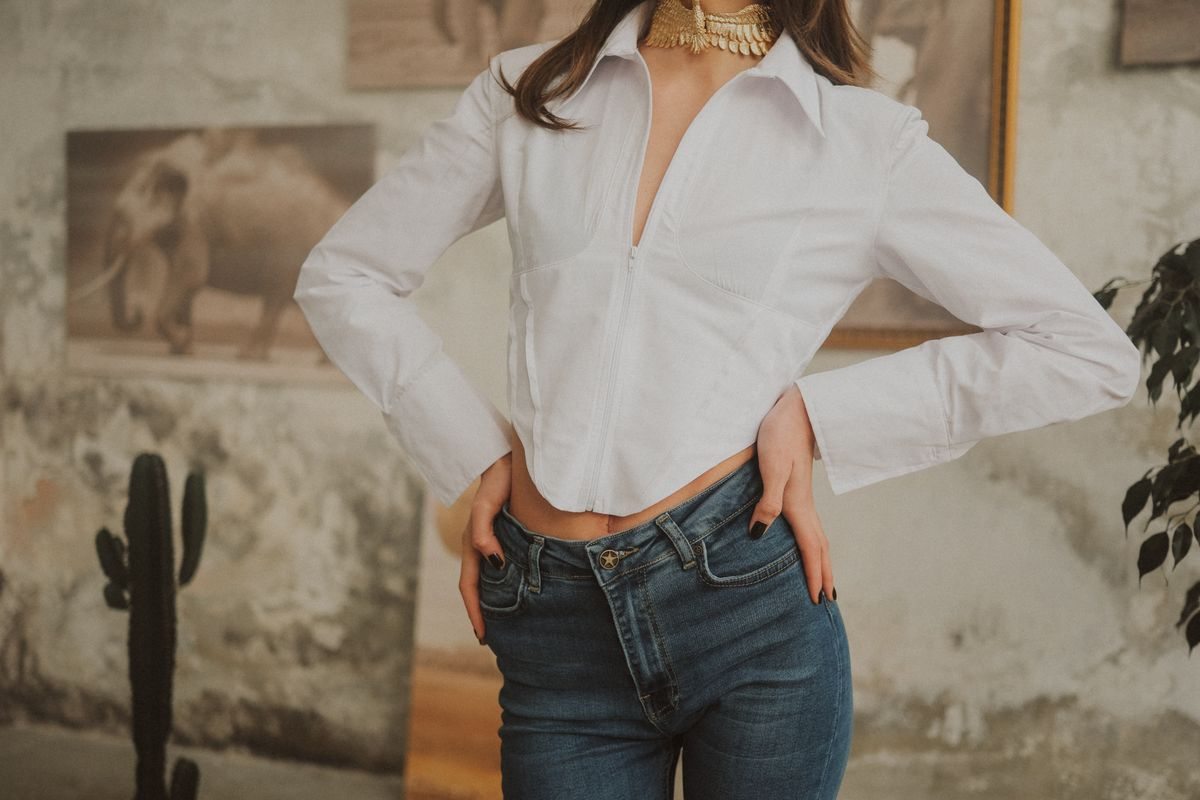
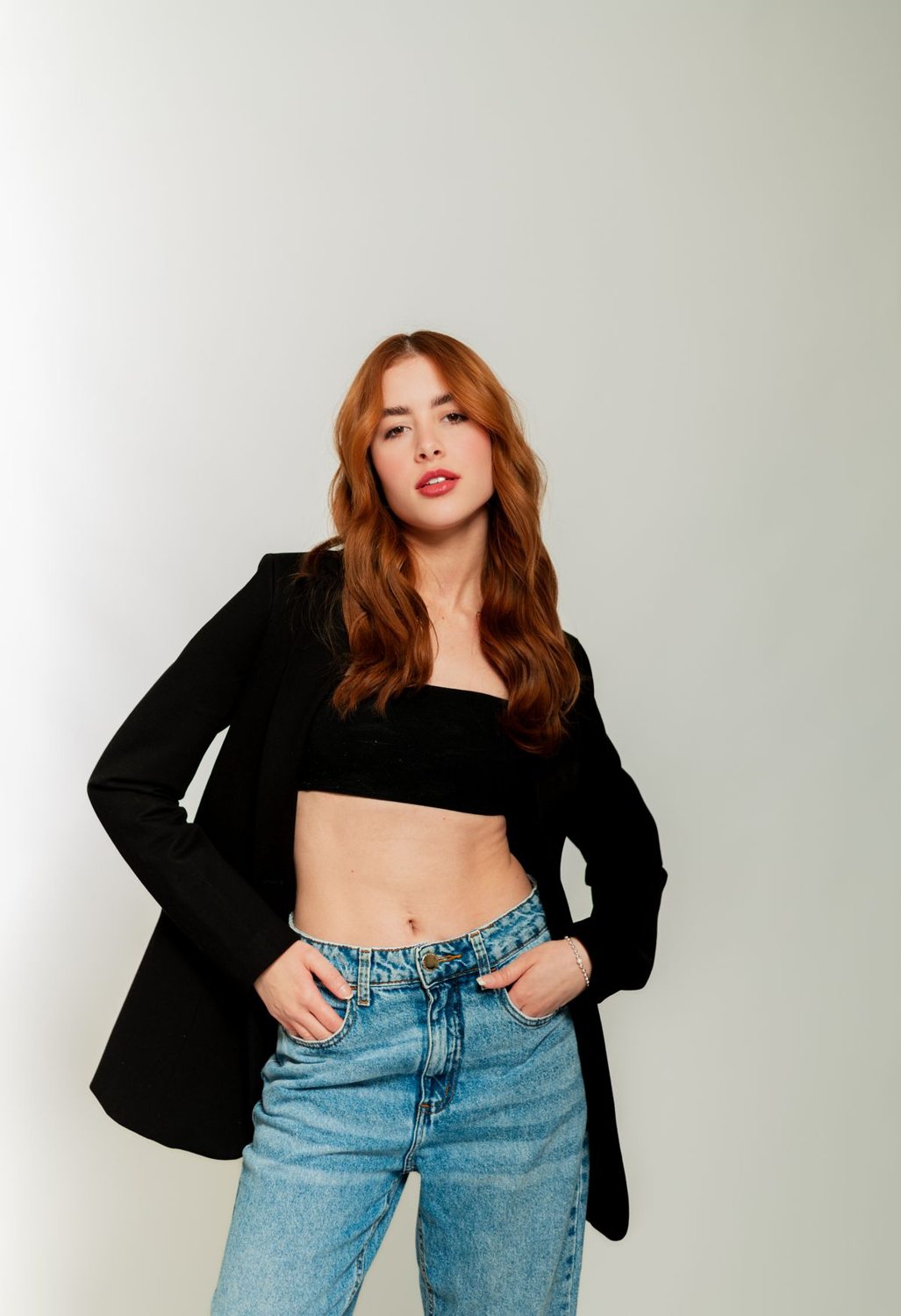
Start with a jacket that ends near the waistband. Leaving most of the trouser leg visible often gives a clear division between the two pieces. If the hem and waistband almost meet, raise your arms and sit down: a strip of bare skin may appear even when the standing outfit seems covered. A longer top beneath can bridge that gap.
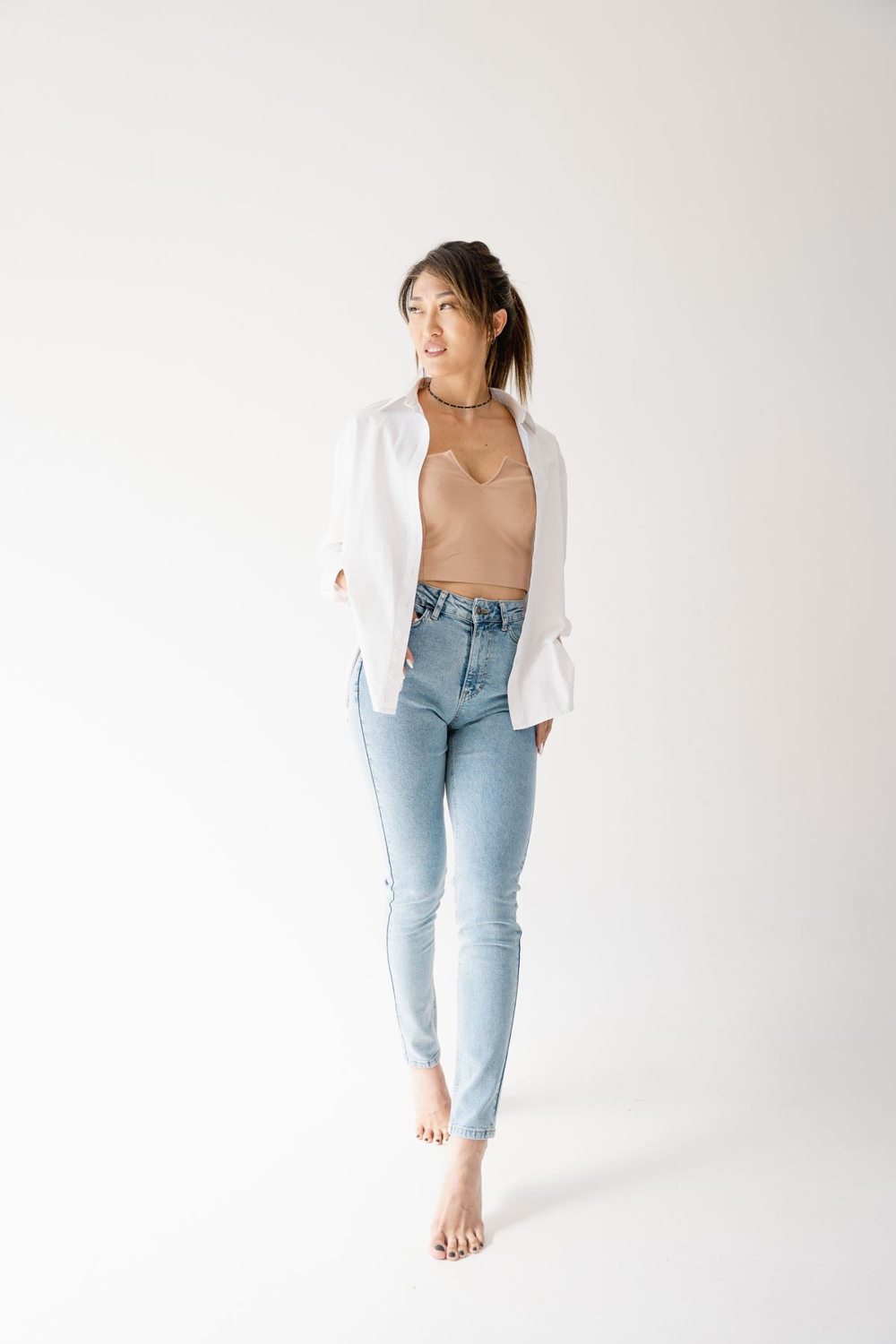
Next, try a jacket that finishes around the upper hip. This is sometimes the awkward middle length, but it can work when the jacket hangs cleanly rather than catching on the trouser pockets. Wear it open and notice whether the vertical edges of your top remain visible. If the jacket seems to spread sideways, a softer shoulder or less bulky fabric may solve more than taking an inch off the hem.
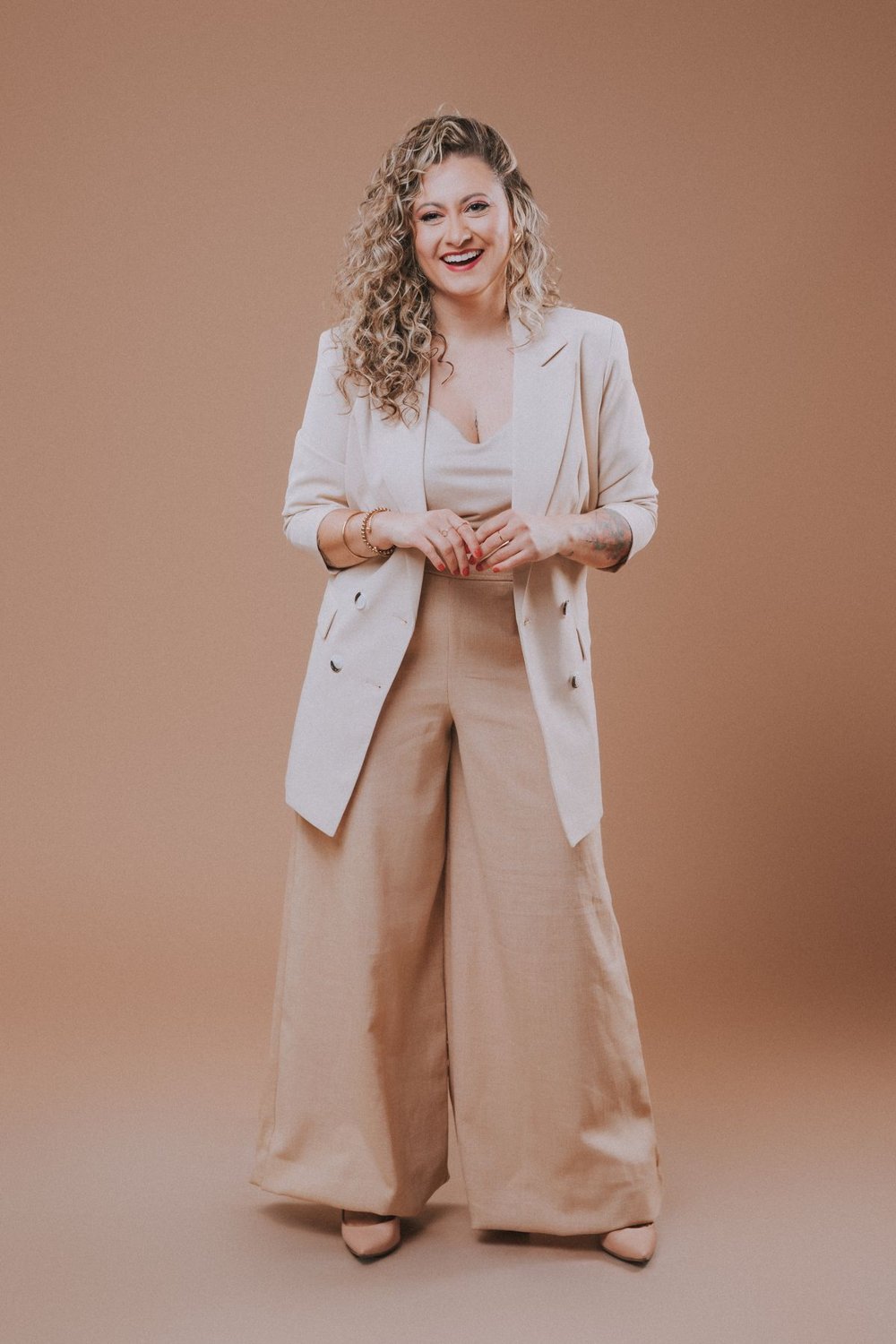
Finally, try a longer blazer or coat. Wide trousers and a long jacket can make a deliberately loose outfit; there is no rule requiring one half to be tight. The useful question is whether you can still see the lines of each garment. A long, straight jacket over fluid trousers often reads more clearly than a stiff, flared jacket over an equally stiff leg.
Check the view in motion
Walk a few steps, put your hands in the pockets and turn sideways. The jacket should release when you move, rather than bunching over the waistband. Check the back too: a jacket that sits neatly at the front may rest on the seat and lift at the rear. That is a fit question, not something a different necklace will fix.
Take a photograph from roughly waist height if the mirror makes comparison difficult. Keep the shoes and camera position the same for each jacket. You are looking for the version that suits the proportion you want, not trying to prove that one length is universally flattering.
Make the smallest adjustment
Before rejecting a combination, open the jacket, change the layer underneath or turn back a cuff if its construction allows it. These adjustments reveal more of the outfit and can make the whole shape feel less enclosed. Avoid forcing a heavy sleeve into a thick roll that immediately falls down.
If two jackets work equally well, choose for the day ahead. The shorter one might fit more easily beneath a raincoat; the longer one might provide the coverage you want when seated. A useful pairing is one you can live in after leaving the mirror.