Use the missing sleeves
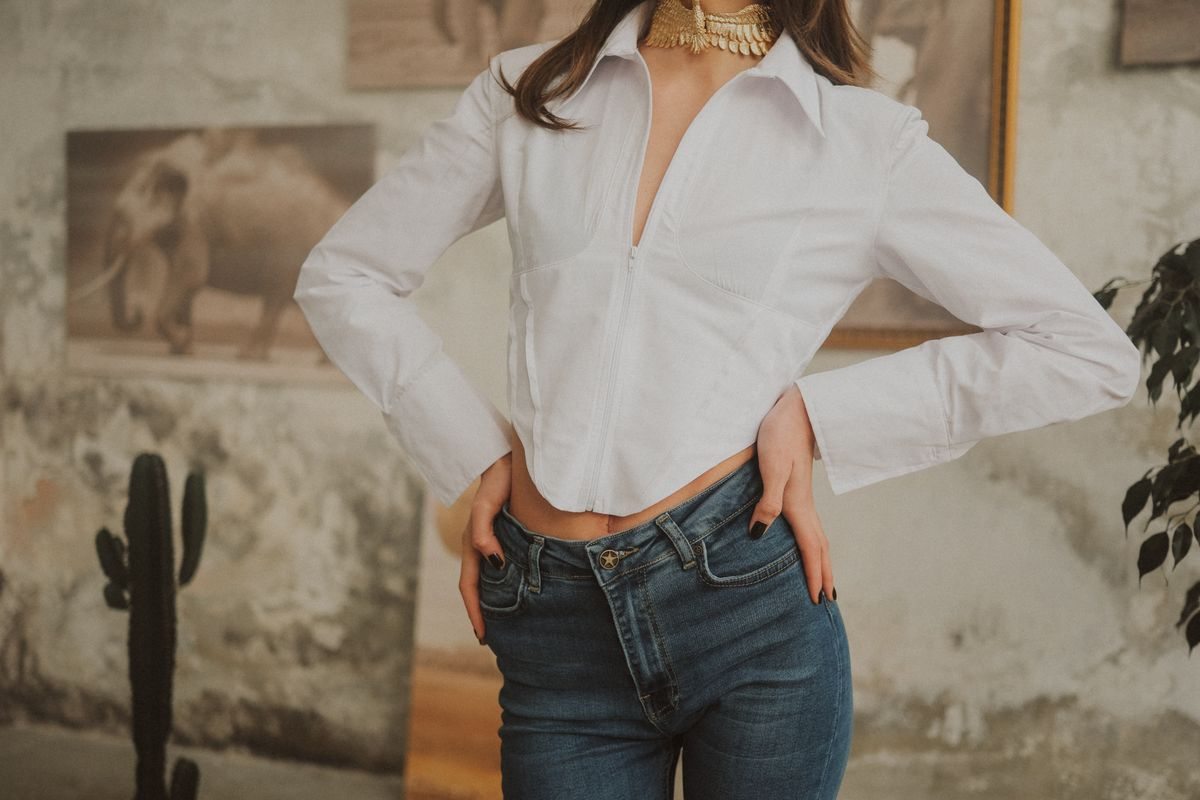
The difference between a vest and a jumper is useful when a shirt has sleeves you want to show. A plain cuff, a full sleeve or a contrast fabric becomes part of the outfit instead of being hidden. Choose the shirt first if that detail is the reason for the combination.
Check the vest's armholes. They should leave room for the shirt without pulling the fabric into bunches. Very deep armholes reveal more of the side seam and underarm area, so look from the side as well as the front. A vest can fit across the chest while still sitting awkwardly at the arm.
Compare the necklines
A V-neck vest opens a space around a shirt collar. A crew neck creates a closer frame. A high-neck base can fill either one, but the layers should remain comfortable when you turn your head. Avoid stacking several tight necklines because they happen to look neat in a photograph.
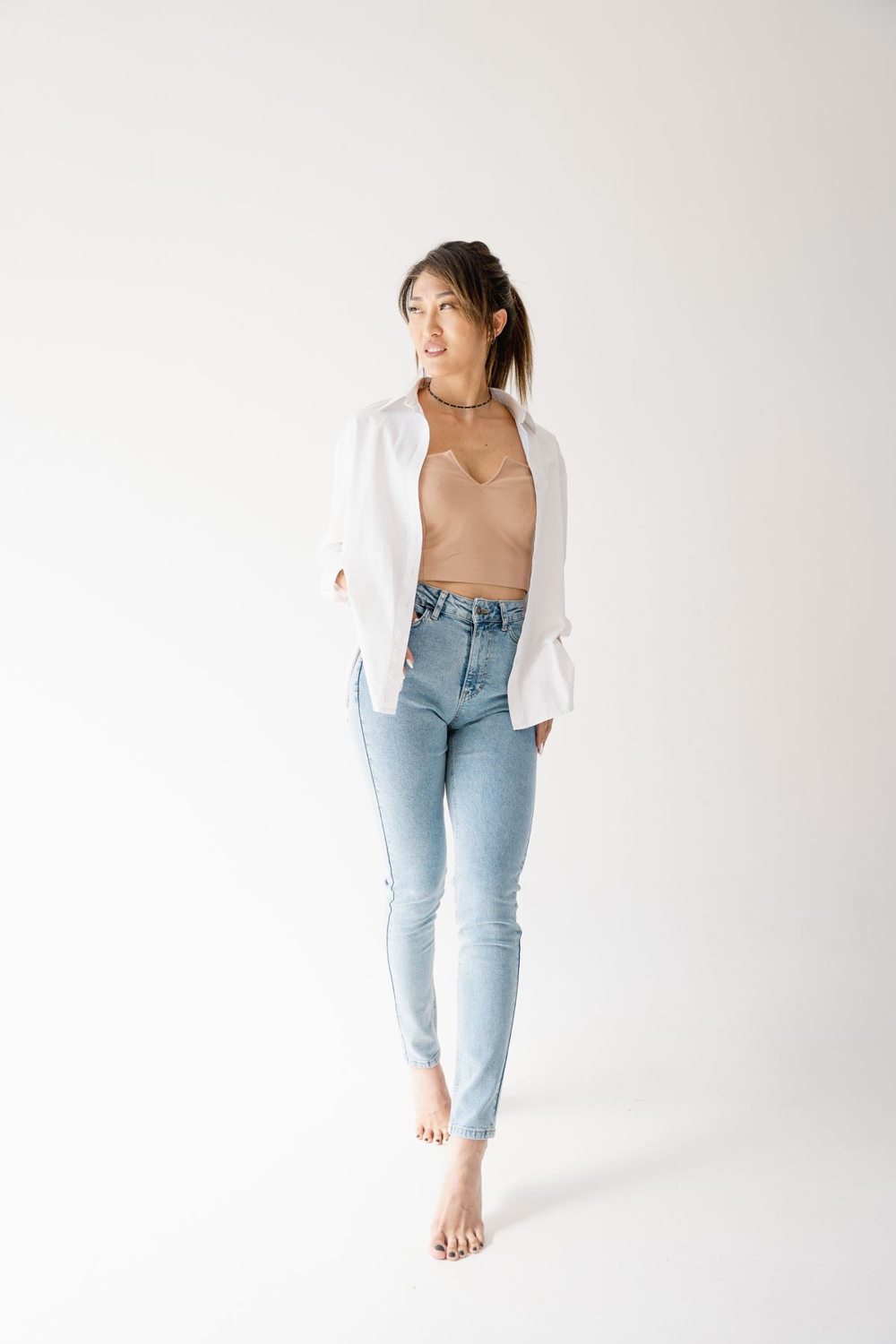
A vest can also go over a simple long-sleeved top or dress. The shirt is not compulsory. A smooth base lets the knit texture stand out, while a printed one creates a more active combination. If the vest itself has a pattern, decide which surface you want to lead.
Let the hem explain the layers
A short vest over a longer shirt makes the layering obvious. A vest that ends at the same point can create a quieter effect. Look at how the two hems behave when seated; a stiff shirt may push the knit upwards, while a soft one may gather beneath it.
With trousers, a tucked shirt can leave a clean waistline beneath the vest. With a skirt, the fabric at the waist may need more room. You can leave the shirt out if that is more comfortable, but check the outline from the back instead of relying only on the front view.
The vest is most useful when it solves a specific problem: a little extra warmth, a new texture or a way to wear a shirt differently. If it adds bulk without contributing any of those things, the simpler outfit may be the one you prefer.