Choose the trainer you will actually wear
The category covers everything from a low canvas shoe to a substantial running-style shape. A trouser hem reacts differently to each. Start with a pair that fits comfortably and suits the amount of walking you expect. Do not choose a supposedly discreet trainer that is uncomfortable simply because it is easier to imagine beside a suit.
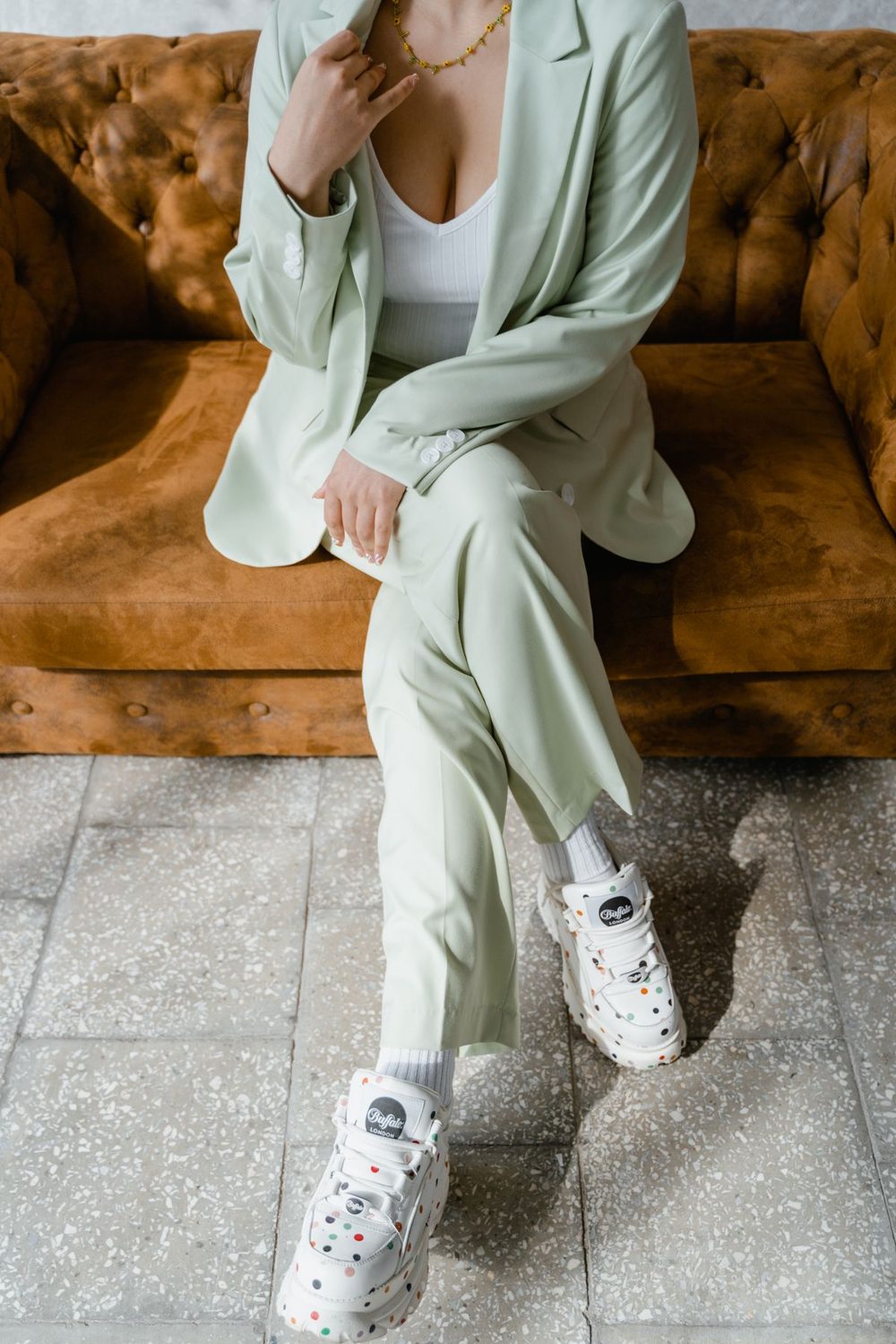
Look at its colour, sole and upper. A plain light pair creates a clear interruption beneath dark trousers. A darker pair may recede. A larger sole changes the balance at the bottom of the outfit. None of these is automatically wrong, but each is a real styling choice rather than an invisible substitute for another shoe.
Settle the hem first
A tapered trouser may finish above the trainer; a wider one may sit over part of it. Check that the hem does not bunch heavily on the upper or slide under the heel. Walk and turn, because a wide leg can move differently from its standing shape.
If the trousers were made for a very different shoe, consider whether another pair in the wardrobe works better before arranging an alteration. A permanent shortening should reflect the footwear you expect to use regularly. One experimental outfit is not always enough information to change the garment.
Let the upper layers choose the mood
A T-shirt beneath a jacket brings the outfit towards the trainers. A shirt keeps more of the tailoring's formality. A fine knit can sit between the two. Choose the layer that suits the occasion and the temperature rather than assuming the trainer requires every other piece to become casual.
With a full suit, check how the jacket looks open. The central layer becomes a larger part of the outfit and can help the combination feel deliberate. If the jacket is close-fitting, make sure the T-shirt or knit does not create folds that pull through the front.
Use condition as part of the decision
Clean does not mean brand new, but the condition of the shoes affects the outfit. Remove ordinary surface dirt using a method suitable for the materials, and let the shoes dry properly if they need cleaning. A heavily worn pair may be exactly right for a casual day and less suitable for a particular meeting.
Follow the workplace or event's actual expectations. Some settings welcome trainers and others do not. If you are unsure, ask a specific question rather than relying on a general claim that tailoring makes any shoe acceptable. The clothes should help you take part in the occasion, not create an avoidable uncertainty.
Avoid adding sporty details by default
A trainer does not require a baseball cap, athletic bag or sweatshirt to justify its presence. Those pieces may suit your style, but they change the outfit further. Try the simple combination first and add only what you want or need.
The bag can either continue the structure of the tailoring or soften it. Check that its strap sits comfortably over the jacket. A heavy crossbody bag may pull the lapel out of place, while a hand-carried bag may be inconvenient for the journey. The practical carrying decision belongs in the styling process.
Wear the full outfit away from the mirror for a few minutes. Sit, walk and pick up the bag. If the trainers and tailoring allow the same ease of movement, they are already sharing something more useful than a trend: they suit the day you are dressing for.