Start with the amount of fabric
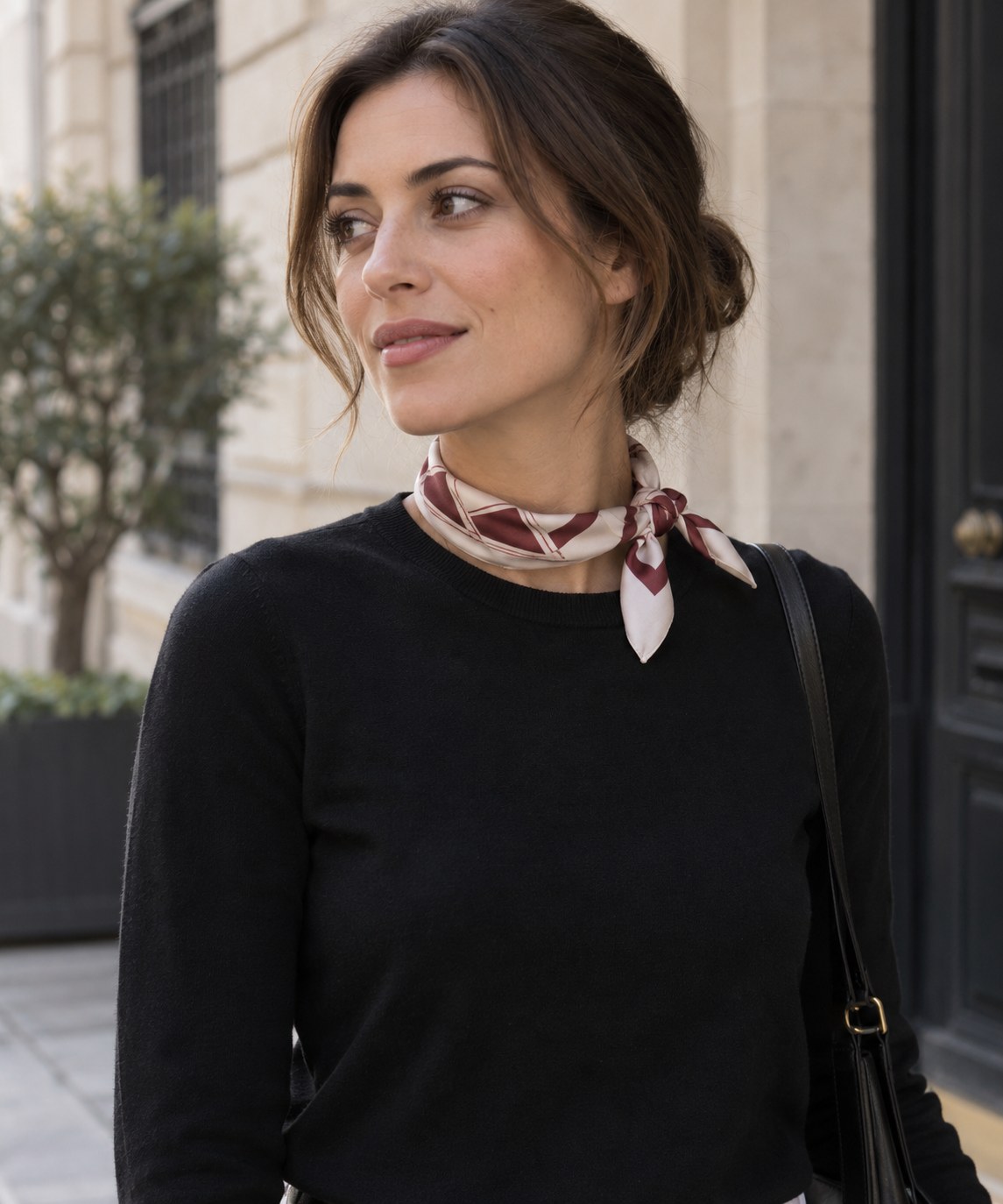
Lay the scarf flat and fold it to the width you want before tying it. A narrow fold creates a different effect from a triangle or loose band. Choose one arrangement and look at it with the outfit rather than trying several placements at once.
At the neck, leave comfortable room and check the knot when you turn your head or sit down. A scarf does not need to be tight to remain visible. If the fabric slips repeatedly, try a simpler arrangement or save it for another use instead of tightening it until it becomes uncomfortable.
Try the wrist or a bag
At the wrist, keep the ends manageable and clear of anything they could catch on. Check how it feels beside a watch or bracelet. A small scarf can take the place of another accessory rather than becoming one more item in a crowded area.
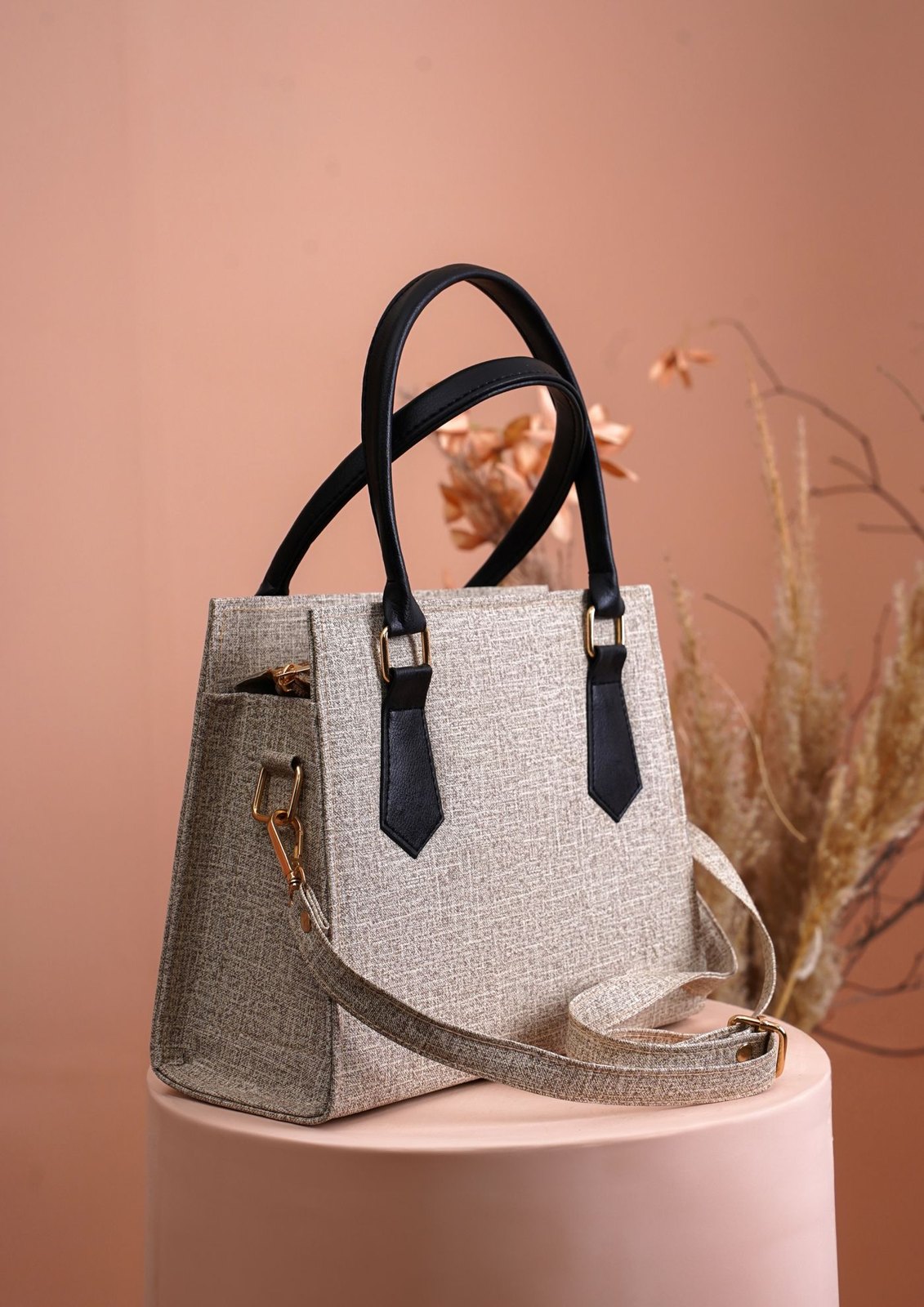
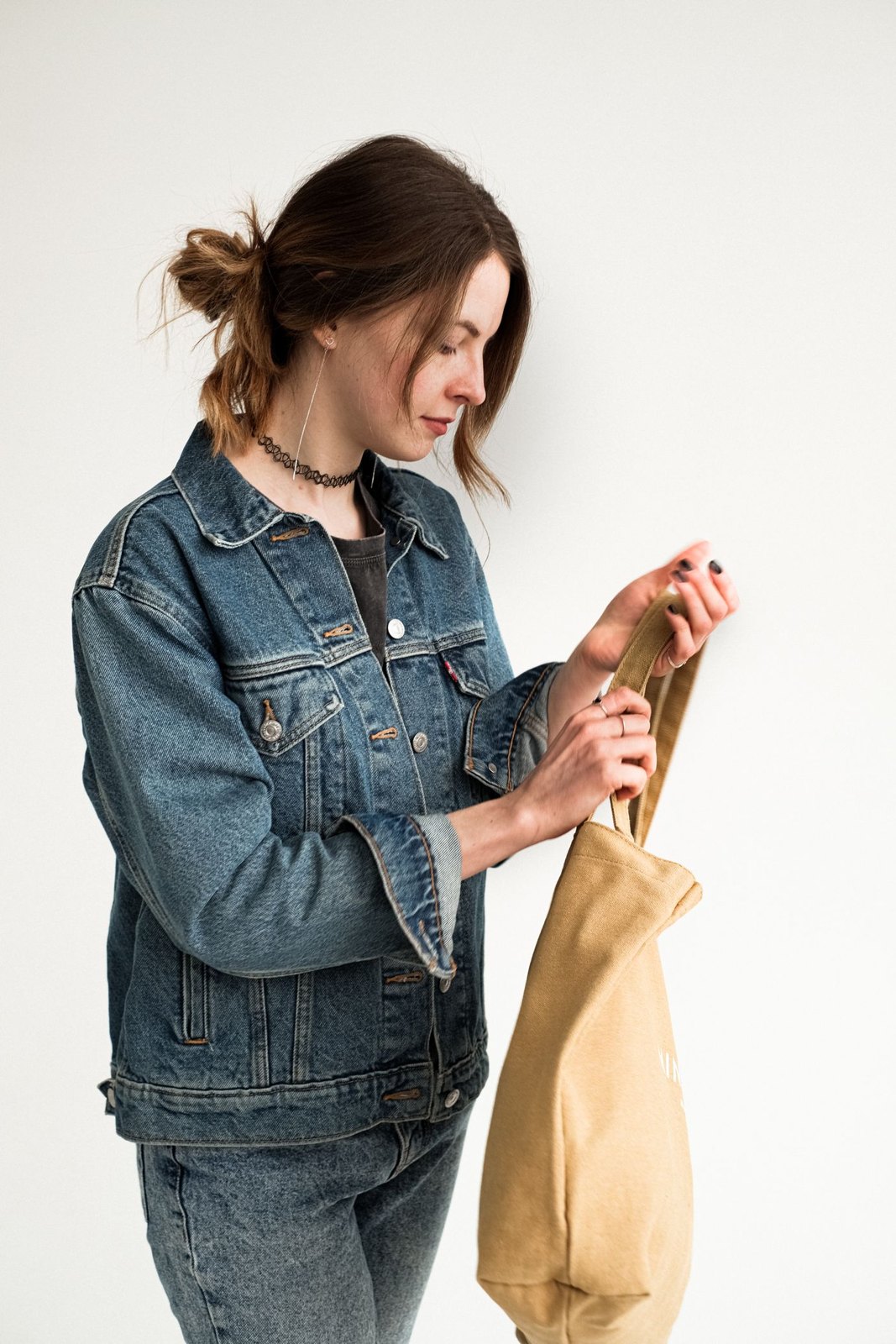
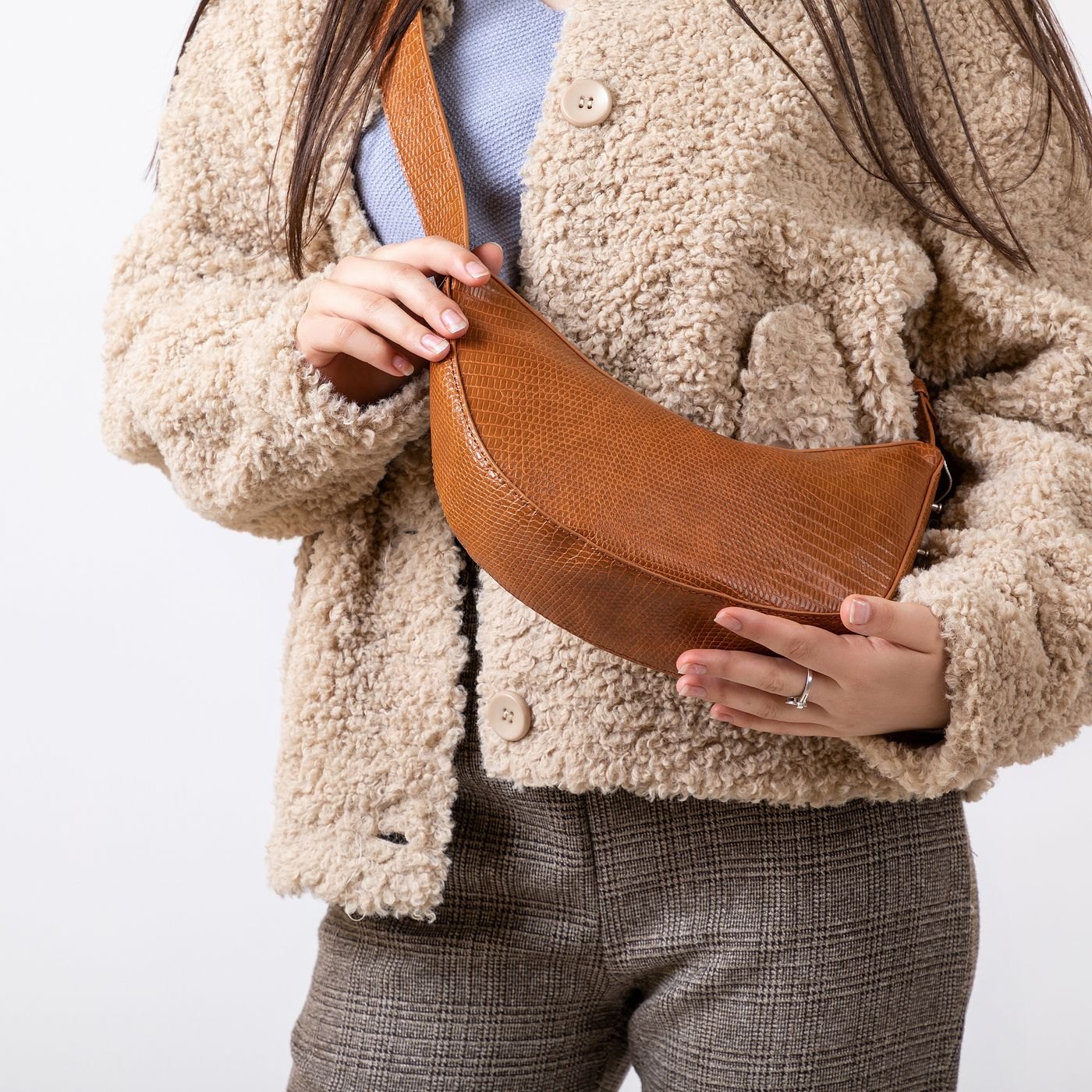
On a bag, try tying it to a handle or another suitable point without interfering with the closure or strap attachment. Check the bag maker's care advice if the materials will rub against one another. Avoid assuming that every dyed fabric can sit against every pale surface without a problem.
Look at the visible pattern
A scarf's full design may nearly disappear when it is folded. Choose the section you want to show, then check it in ordinary light. A small area of colour can link to a shirt, shoe or earring without matching it exactly. You can also let it stand alone if the rest of the outfit is quiet.
Use the scarf's own care instructions, particularly when it is silk or has an unfamiliar finish. Untie it after use rather than leaving the same tight knot indefinitely. Store it where it will not catch on jewellery or bag hardware.
If the detail feels fussy during the day, remove it and notice whether you prefer the outfit that way. A scarf is an optional addition. Its value is in the colour or shape you enjoy, not in proving that one accessory can be worn in every possible place.