Count the seats before planning the table
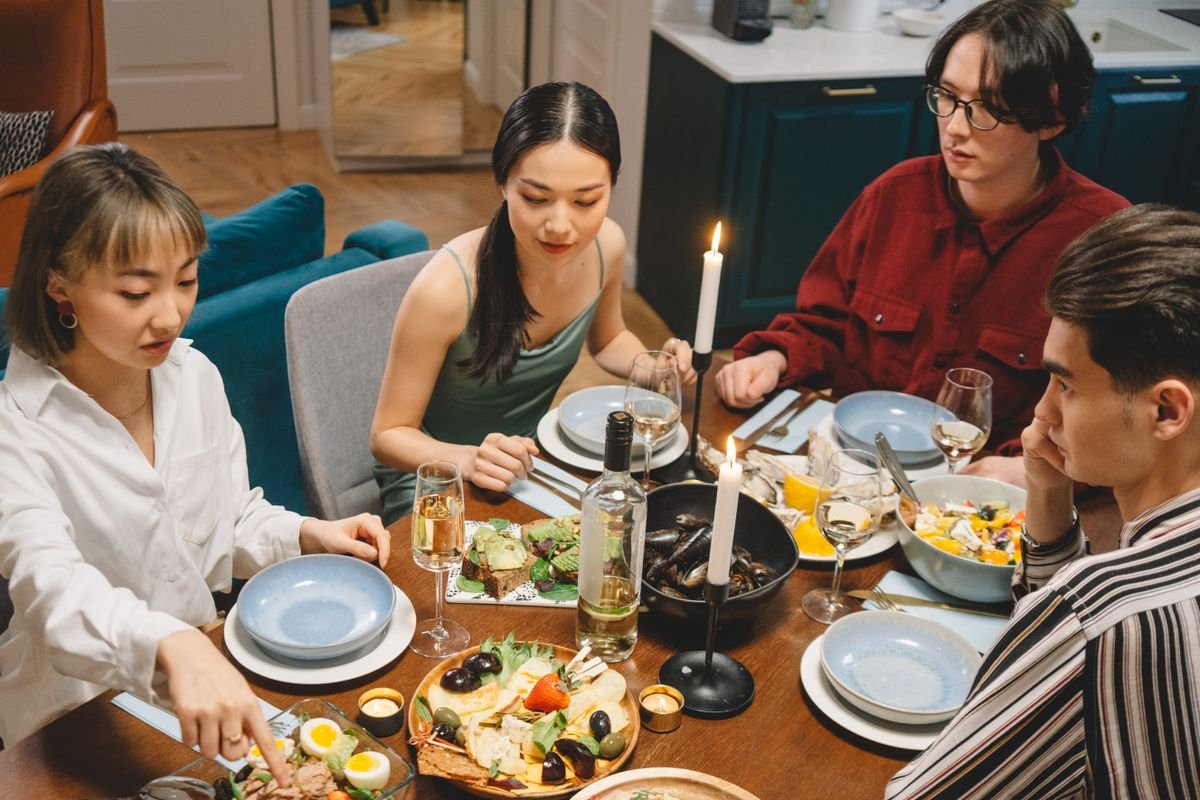
Think about where people will actually sit, put a drink and move through the room. A table that looks generous when empty may become crowded once plates, serving dishes and elbows arrive. Use the space you have comfortably rather than adding guests to match an ideal version of the evening.
Check whether coats and bags have a place. Moving them off the seating before people arrive can make a small room feel more available. Leave the route to the bathroom and kitchen clear, especially if chairs will be pulled out during the meal.
Choose a menu you can leave alone
Food that requires constant last-minute attention keeps you away from your guests. Choose dishes you already know how to prepare and keep the number of finishing tasks manageable. Ask about dietary requirements in advance, and follow appropriate food-safety guidance for preparation, storage and serving.
You do not need to make everything. Bought bread, a prepared dessert or a simple platter can reduce the amount of work without making the gathering less thoughtful. Consider the whole sequence: oven space, serving utensils, plates and the moment each dish needs attention.
Set out what will be needed
Put glasses, water and napkins where guests can reach them. A small side surface for drinks can free the dining table, provided it is stable and does not block movement. Keep fragile or easily knocked objects out of the busiest areas.
Lighting should make faces and the table easy to see. If you use candles, place them safely away from fabrics and passing hands, and do not leave them unattended. An ordinary lamp can provide a softer atmosphere without adding another thing to supervise.
Walk through the evening once
Before guests arrive, carry an empty serving dish from the kitchen to the table. Notice where you need to open a door, move a chair or put something down. This quick rehearsal can reveal an obstacle that is much harder to negotiate with a hot dish and a full room.
Count the utensils needed for serving as well as eating. Two dishes that finish together may each need a spoon, and a dessert may require plates that are still in use. Set those pieces aside so you are not searching through drawers while food waits.
If guests offer to bring something, give a clear, bounded suggestion when it would help. Asking for a particular drink or a dessert is easier to coordinate than an open invitation that produces three similar dishes. Equally, it is fine to say that everything is covered and you look forward to seeing them.
Choose a place for used plates that does not take over the remaining clear surface. A little planning here lets you tidy only what is necessary while staying part of the conversation. The objective is not seamless service; it is reducing the small interruptions that repeatedly pull you away.
Make the timing clear
Tell guests whether the invitation is for a meal or a drink and roughly when food will be served. This helps people plan and reduces the need to keep checking whether everyone has arrived. A relaxed evening still benefits from a clear beginning.
Leave some tasks for after people go. Clearing every plate immediately can make the gathering feel as though it is being dismantled around them. Deal with what is necessary, then sit down. The room does not need to return to its starting condition while the conversation is still happening.