Give the doorway a limit
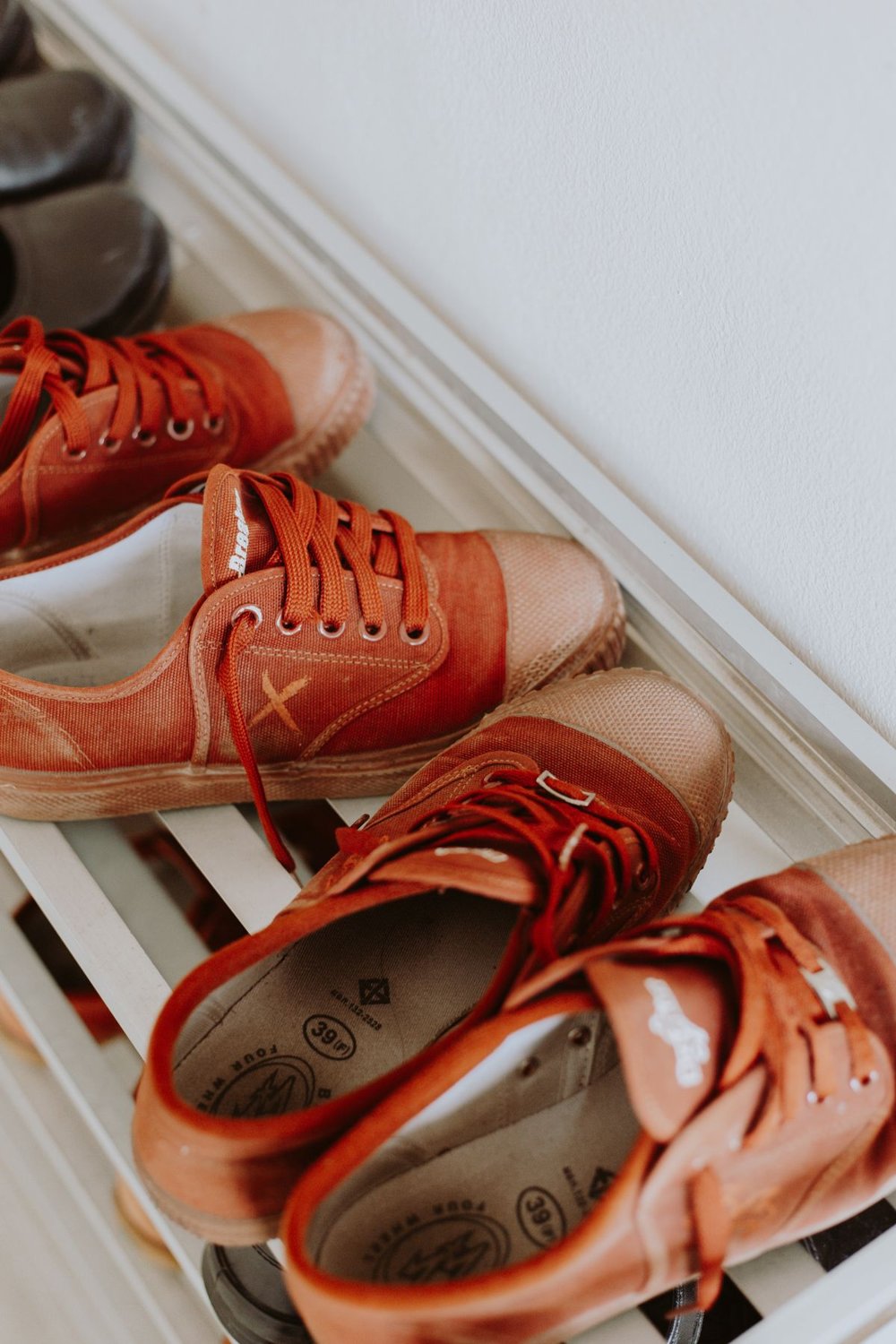
Choose enough space for the shoes being worn this week. That might be two pairs per person or simply the amount that fits on an existing shelf. The precise number matters less than keeping a clear route through the door. Shoes should not become an obstacle you step around while carrying bags.
Put occasional footwear elsewhere. Evening shoes, out-of-season boots and a pair awaiting repair do not all need the most convenient position. A crowded rack makes it harder to find the ordinary pair you want in the morning and gives damp shoes little space to air.
Make the next pair ready
When you take shoes off, set them together rather than dropping them at different points along the hall. Loosen laces or open fastenings so that putting them on again is straightforward. If a pair needs cleaning, follow its material-specific care instructions before returning it to the rack. Avoid putting wet footwear into a closed box and forgetting it there.
Leave a small cloth or the appropriate brush nearby only if it has a sensible home of its own. A collection of half-used cleaning products can occupy more space than the shoes. Keep products away from children and pets and follow their storage directions.
Notice the pair you keep avoiding
If the same shoes remain at the back for weeks, ask why. They may be uncomfortable, hard to combine with your trousers or simply inappropriate for the weather. Moving them closer to the door will not solve those problems. Decide whether they belong in occasional storage, need attention or should leave the collection.
A rotation does not have to be a schedule. It can mean allowing one pair to dry while another is ready, or keeping a weather-appropriate alternative beside your usual shoes. Check the arrangement from the doorway at the end of the week. If it takes longer to put a shoe away than to leave it on the floor, simplify the storage. The next morning should begin with a usable pair, not a search.