Make room at the neckline
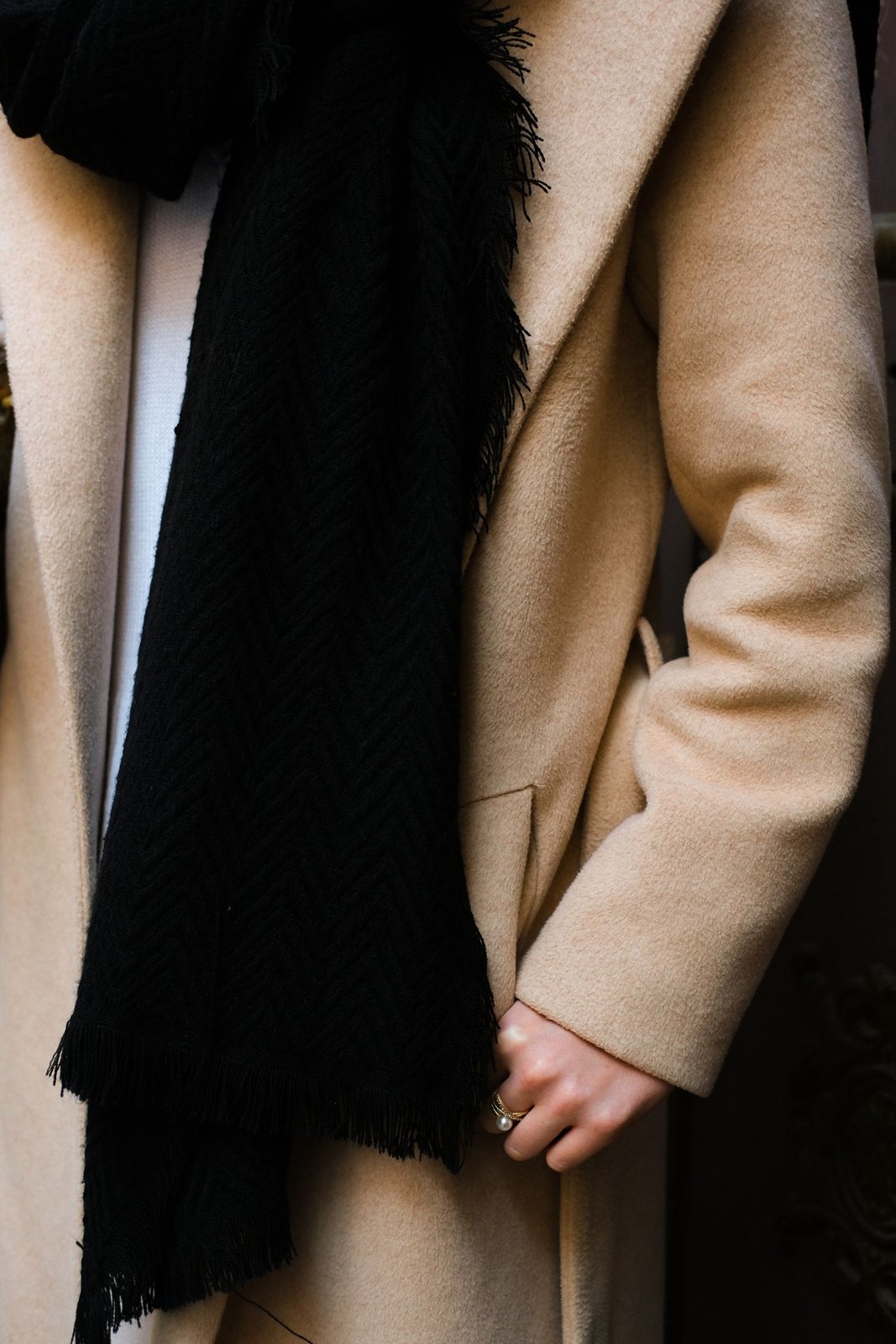
Put the coat on first and fasten it as you expect to wear it outside. Notice how much space remains around the neck and upper chest. A high collar, wide lapel and hood each leave a different area for a scarf. Start with a fold that fits that space rather than a knot copied from another coat.
If the coat closes close to the neck, a flatter arrangement may feel better than a large loop. With an open neckline, more of the scarf can remain visible. Check that the fabric does not push a collar into your face or make the fastening difficult to use.
Try the whole movement
Turn your head and lift your arms. A scarf should not make these ordinary movements feel restricted. If the knot sits under a bag strap, move the strap into place and see whether it presses uncomfortably. A combination that works without the bag may need a different fold for the commute.
Look at where the ends finish. Tucking them inside can keep the front compact, while leaving them visible adds vertical lines. Choose a length that remains manageable around zips, buttons and the things you carry. Keep loose ends clear of equipment or moving parts in the environment where you use them.
Let colour work in the visible area
Only part of a scarf may show inside a coat. Judge that visible section rather than the entire scarf spread across a table. A patterned piece can appear quite quiet when folded narrowly, while one bright stripe can become the main colour near your face.
Try the scarf beside the top you wear when the coat comes off. You may want it to remain part of the indoor outfit or prefer to remove it with the coat. Either choice affects how much arrangement you want to repeat during the day.
If the coat and scarf continually compete for space, select a thinner scarf or another outer layer. There is no need to make a favourite bulky scarf work inside every collar. A comfortable combination usually needs less adjusting once you are outside.