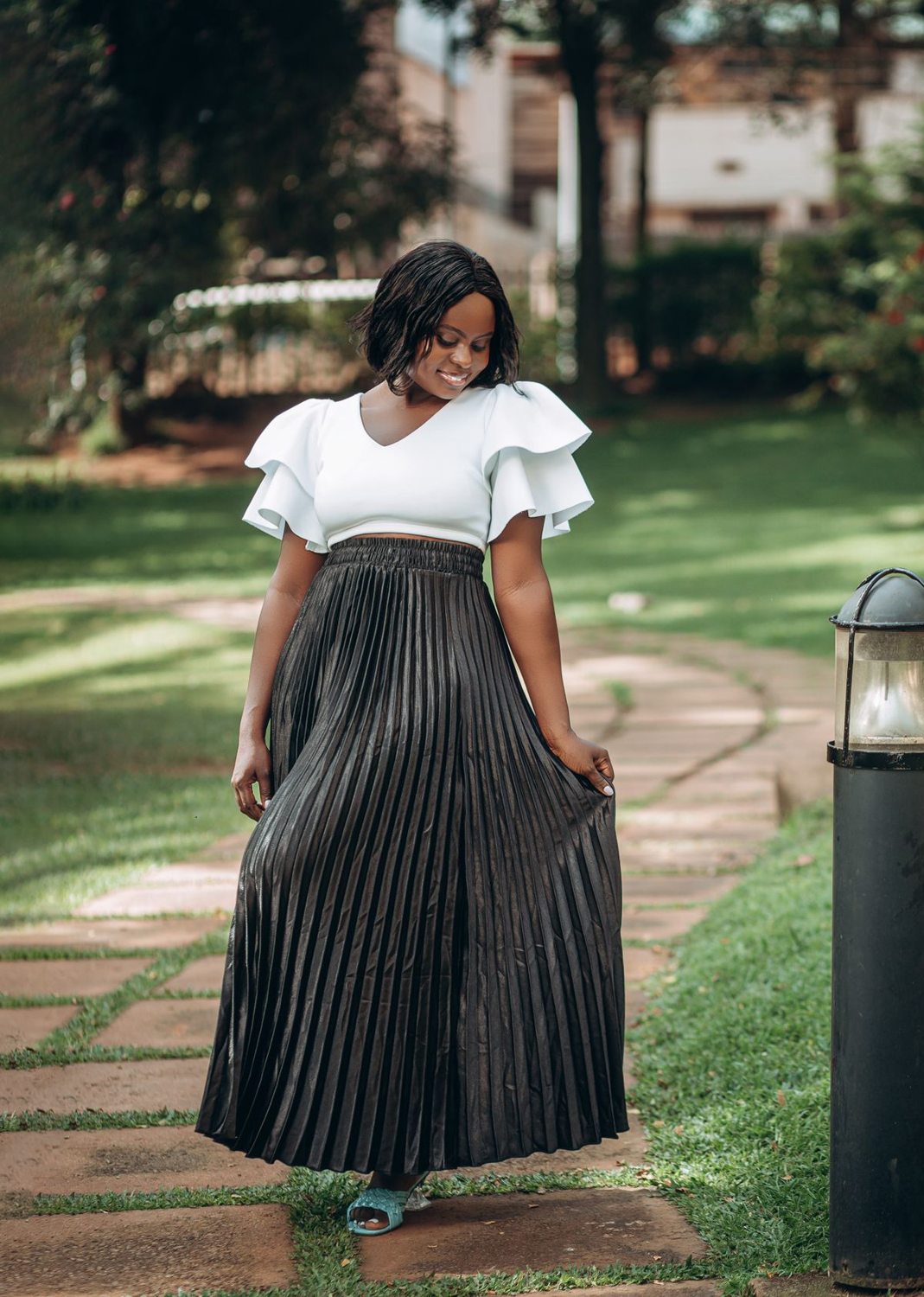
Find out where the movement comes from
A full skirt gains movement from its width. A narrow long skirt may rely on a slit, a wrap opening or stretch in the fabric. Before planning the outfit, take a normal stride in the skirt and notice which part allows it. If the only way to walk is to shorten your steps, that limitation will remain after you add the right shoes.
Try a step up and a seated position too. The front can rise or the opening can spread in ways that are not obvious while standing. Choose the level of coverage you want in those positions, not only the one visible in a mirror. A skirt can be beautifully made and still be wrong for a day that involves lots of movement.
Keep the lower edge clear
Put on the actual shoes and look at the back of the hem. A skirt can clear the toes while still catching beneath the heel. Walk around a corner and turn, since a wide skirt may swing closer to the ground during movement. Check any uneven or handkerchief points separately from the main hemline.
A length that is pleasant indoors may collect water outside. Consider the route and the forecast before choosing a floor-skimming shape. If you will need to lift the skirt every few steps, a shorter option may be more useful. Alteration is worth discussing only after you know which length and shoes you want to use most often.
Make the waist comfortable for sitting
A firm waistband can hold a full skirt neatly but still press while seated. Test it for more than a few seconds. Look at where the top sits against it, especially if you have tucked in a thick knit or shirt. Removing excess fabric may improve comfort more than loosening a belt.
If the skirt has an elastic waist, check that it remains where you want it as you walk. A shifting waistband changes the length below it. Adjusting the hem cannot solve a skirt that continually moves up or down at the waist.
Choose a top that does not fight the skirt
A shorter top can leave the skirt's full shape visible. A longer one creates a different outline and may work particularly well with a narrower skirt. You can also wear loose shapes together, provided you like the result and the layers move freely. There is no requirement to make the top tight simply because the skirt is full.
Watch for a jumper catching on pleats or gathering at the hip. A small change in its hem can release the skirt. If the arrangement depends on continual adjustments, choose a smoother or shorter layer rather than spending the day pulling the two pieces apart.
A day with several stops
Imagine a morning walk followed by lunch and a bus ride home. A skirt that works for the walk still needs enough room at the knee for the bus step and a waistband that remains comfortable at the table. Try those positions together instead of treating each as a separate outfit problem. You may find that a slightly fuller shape serves all three without another adjustment.
For a day mostly at a desk, the priorities can be different. The fabric behind the knees and the way the skirt sits under you may matter more than its movement in wind. Let the itinerary determine which test deserves most attention.
Add the things you will carry
A crossbody bag can rest against the skirt and change how it hangs. A large shoulder bag may pull the top out of position. Try the packed bag with the clothes, not just the empty one. When movement is the central requirement, the weight you carry is part of the outfit.
Long scarves, belts and jewellery can also interact with a moving skirt. Keep loose ends clear of anything they might catch on and follow any safety requirements of the setting. Style decisions stop being useful when they make an ordinary task harder or unsafe.
After these checks, let the skirt move naturally. A long skirt is not supposed to remain arranged like a still photograph. Choosing one that behaves well while you walk is what allows its shape and fabric to become an enjoyable part of the day.