The heel should come with you
A loafer has no laces to draw the upper around your foot. Its shape has to do more of that work. When you walk, notice whether your heel lifts a little or whether the whole shoe repeatedly stays behind. A small movement and a shoe you are gripping with your toes are different experiences. Do not let a persuasive mirror view make that distinction disappear.
Try both shoes. Stand, turn and take several normal steps instead of shuffling carefully in front of the seat. If you normally wear socks with loafers, bring that thickness of sock. A fitting made with a shop's thin stocking can tell you very little about the pair you intend to wear with wool socks in October.
Look at the bend
Notice where the shoe creases as you step. The upper should move with your foot rather than folding hard against a toe. Check the front from above: your toes should not be pressing against the end or visibly forcing the sides outwards. A pointed shape can contain unused space beyond the toes, so the position of the very tip is not the only useful measure.
If one size slips and the next squeezes, another model may suit you better. A different width or a different shape across the instep can be more useful than repeatedly changing length. Do not buy on the assumption that a painfully tight shoe will become comfortable. The shop can explain the material, but it cannot promise how your particular feet will respond.
Try the outfit as well
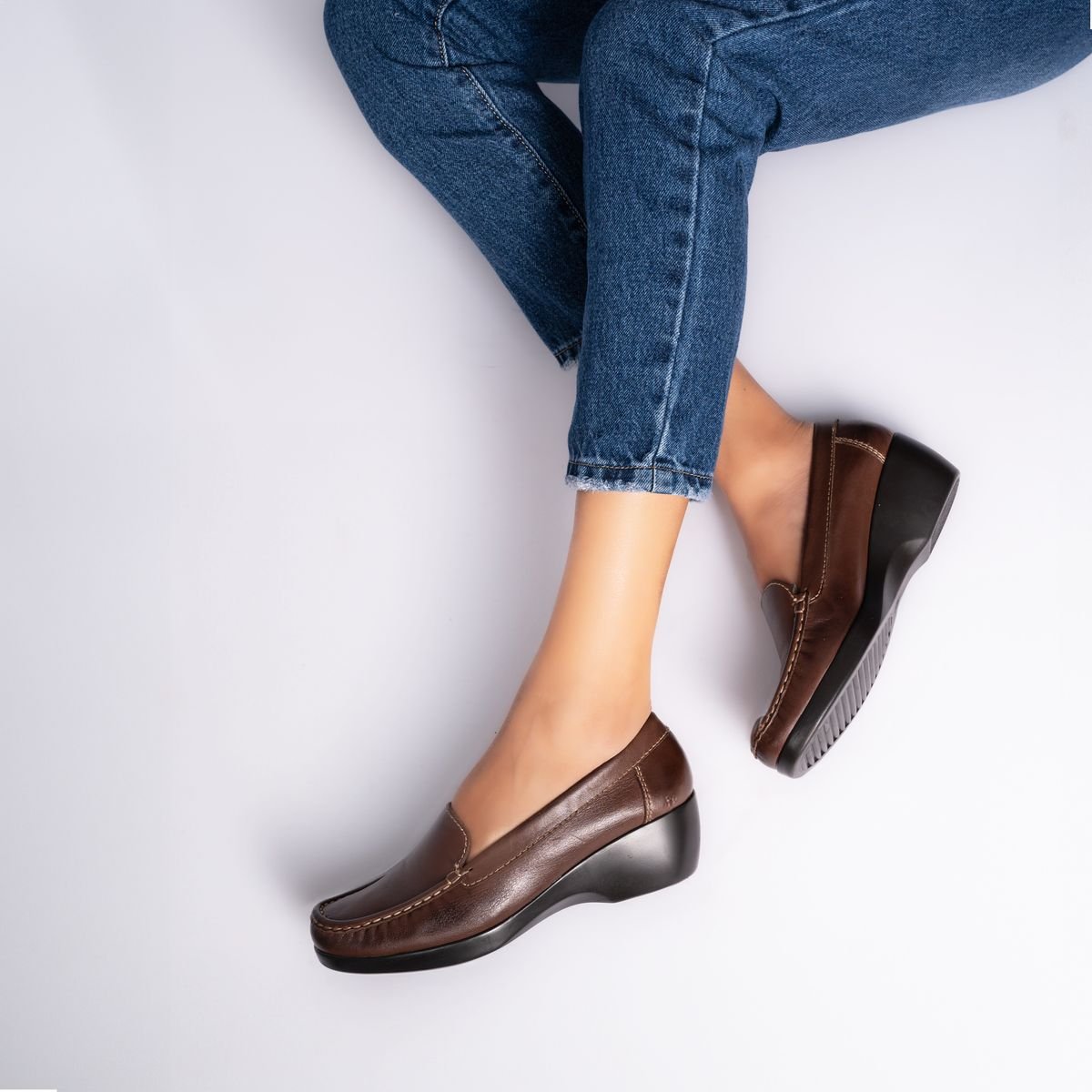
A loafer's sole thickness affects the balance beneath a trouser hem. Bring a pair you wear often, or photograph the combination before removing the shoes. A heavy sole may suit wide trousers while feeling visually bulky beneath a narrow cropped pair; neither pairing is a rule.
At home, keep any further try-on within the seller's return conditions and on a clean surface. Notice the heel after a few minutes, not only the first step. If you are already planning extra pads and different socks to make the shoe stay on, consider whether you have found the right loafer yet.