Begin with two
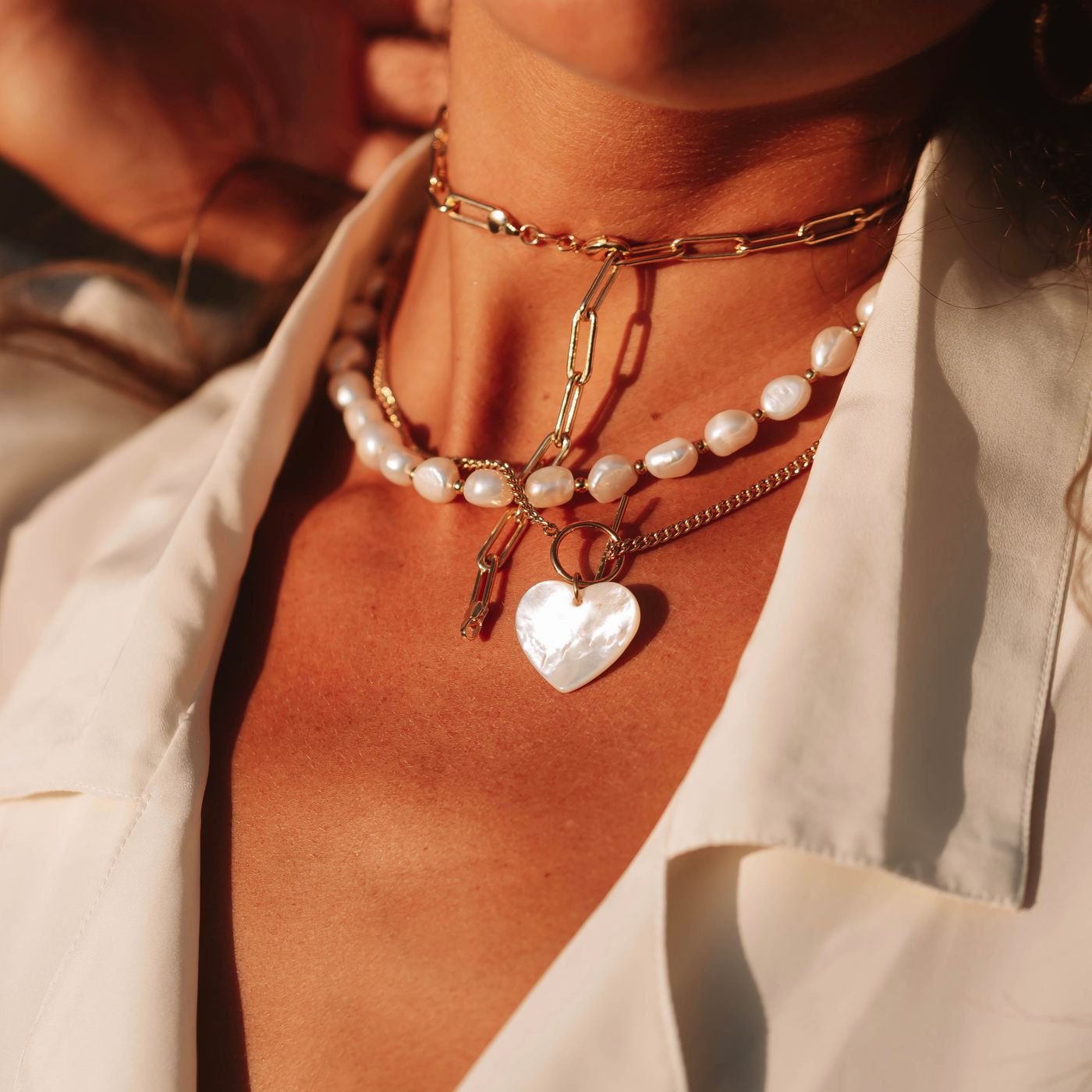
Put on the necklace you most want to wear, then add one other. Starting with an entire handful makes it difficult to tell which piece is causing a tangle or crowding the neckline. Two clearly separated lengths can already create the layered effect you want.
Look for a visible gap between the main features. If both pendants land at almost the same point, they may overlap rather than form layers. Adjust a fastening where the necklace is designed to allow it, or choose a different length. The aim is separation in the worn position, not simply different measurements on a table.
Vary one quality at a time
A fine chain beside a slightly heavier one creates contrast without needing several colours and pendant shapes. You could instead repeat the chain weight and vary the pendant. Keeping one feature consistent helps you see whether the combination works before introducing another difference.
Consider how the necklaces move. A rigid short piece and a long flexible chain behave differently from two equally fine chains. Some tangling may still occur, especially during an active day. An arrangement that looks good only while you remain still may be better simplified.
Give the neckline a role
Try the layers against the actual top. An open shirt can frame a shorter arrangement, while a plain high neckline offers a continuous background for longer pieces. If a pendant repeatedly slips beneath the edge, change its position or remove that layer.
Check the back as well as the front. Clasps should remain secure and should not be forced into attachments they were not made for. Do not add a heavy pendant to a fine chain without knowing that the chain and fastening can support it.
Decide which piece should stay still
A central pendant often works best when the other necklace leaves its outline visible. Put that pendant on first and use it as the anchor for the arrangement. If a second pendant repeatedly sits on top of it, changing only the chain length may help; if their shapes keep interlocking, choose a different second piece.
Try the combination for a few minutes while getting ready. Lift your arms to put on a jacket, sit down and lean forward. This short trial reveals more than arranging every chain carefully and staying motionless. If one piece repeatedly turns backwards, notice whether another chain is pulling against its clasp.
When you take the layers off, lay them separately rather than dropping them into one compartment. Fastening a chain before storage and giving it its own space can reduce the amount of untangling required next time. For delicate or valuable jewellery, follow its specific storage guidance and avoid pulling a knot tight while trying to separate it.
A combination that works for dinner may still be wrong for a busy day of movement. Keep a simpler version in mind so that removing one layer feels like an available choice, rather than losing the whole idea of the outfit.
Finish before it feels crowded
You may find that the third necklace adds little beyond another moving part. Take it off and compare. Layering is a choice about the relationship between pieces, not a minimum quantity. For storage, separate the chains again so the next wearing does not begin with untangling the previous one.