Start with the dress beneath
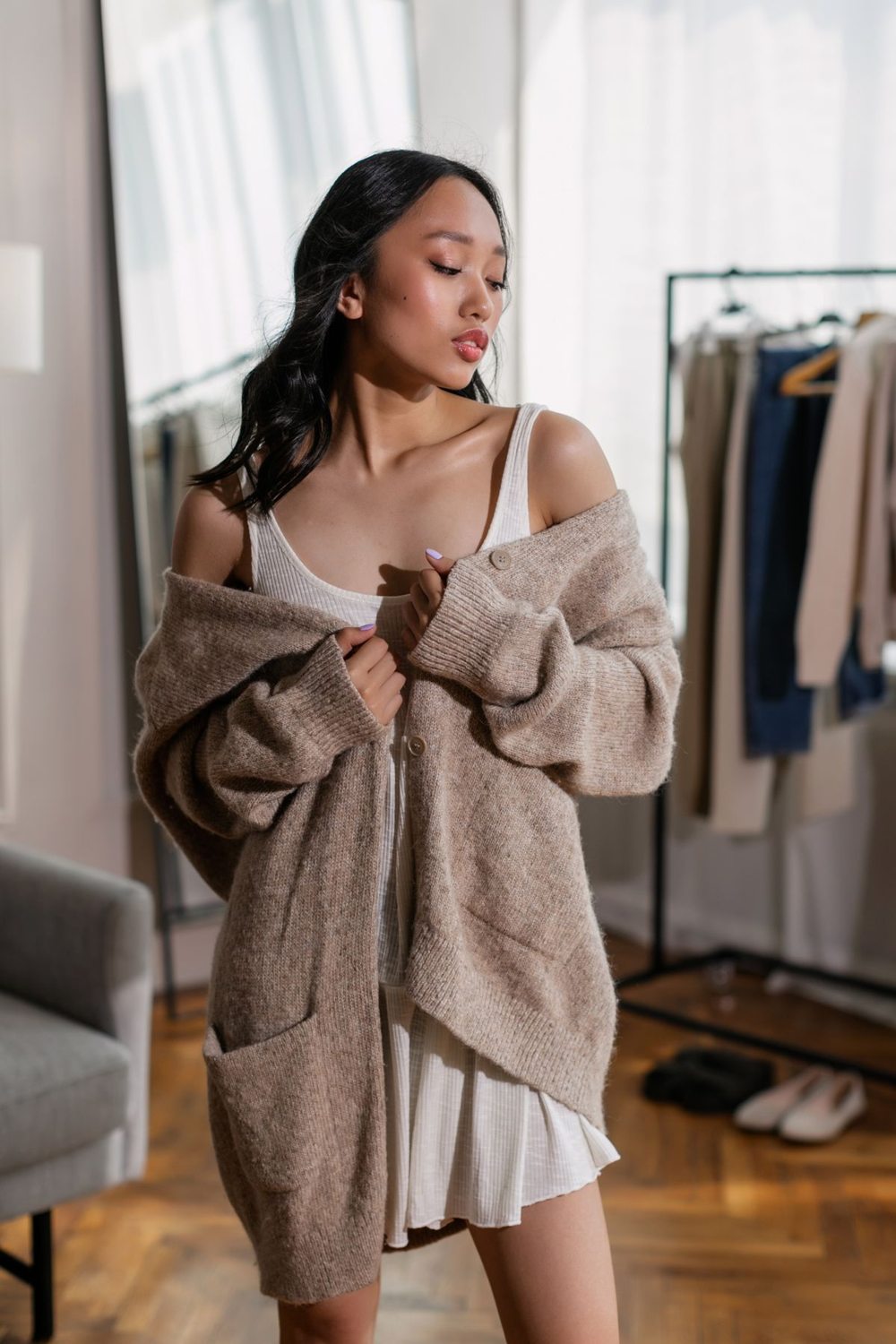
A smooth dress and a heavily textured jumper will behave differently from two soft, clingy knits. Before arranging the waist, put the layers on and walk around. Notice whether the jumper slides, grips or bunches. This tells you whether the combination needs a different knit rather than a more elaborate styling trick.
A sleeveless or short-sleeved dress usually adds less bulk at the upper arm. If the dress has puffed sleeves, ties or a large collar, those details may remain visible beneath a close-fitting jumper. You can make them part of the outfit, but do not expect a thin knit to hide them completely.
Choose a hem you can leave alone
A shorter knit can end near the natural waist of the dress. A longer one can create a straight shape from the shoulder down. Neither is automatically better. The useful test is whether the hem stays where you want it after you sit and stand.
An open cardigan leaves more of the dress visible and can be simpler than trying to tuck a jumper into a nonexistent waistband. If you add a belt, make sure it holds the fabric comfortably rather than making a tight ridge. Avoid relying on a precarious fold that needs resetting every few minutes.
Check the neckline and skirt together
A high-neck knit over a V-neck dress hides one of the dress's main features. A cardigan worn open preserves it. If you like the dress mainly for its neckline, choose the outer layer accordingly. Look at any visible straps and decide whether they are intended to show.
At the lower half, let the dress hang freely. A long jumper may rest over a gathered waist and create extra volume at the hip. Lifting its hem a little can show the skirt's movement, but if that arrangement feels fussy, a different length is the easier answer.
Take the knit off once before leaving. If the room becomes warm, you should still have an outfit you are comfortable wearing. Carrying a layer that can be removed is often more useful than building a combination that only works in one fixed arrangement.