Try the hand in use
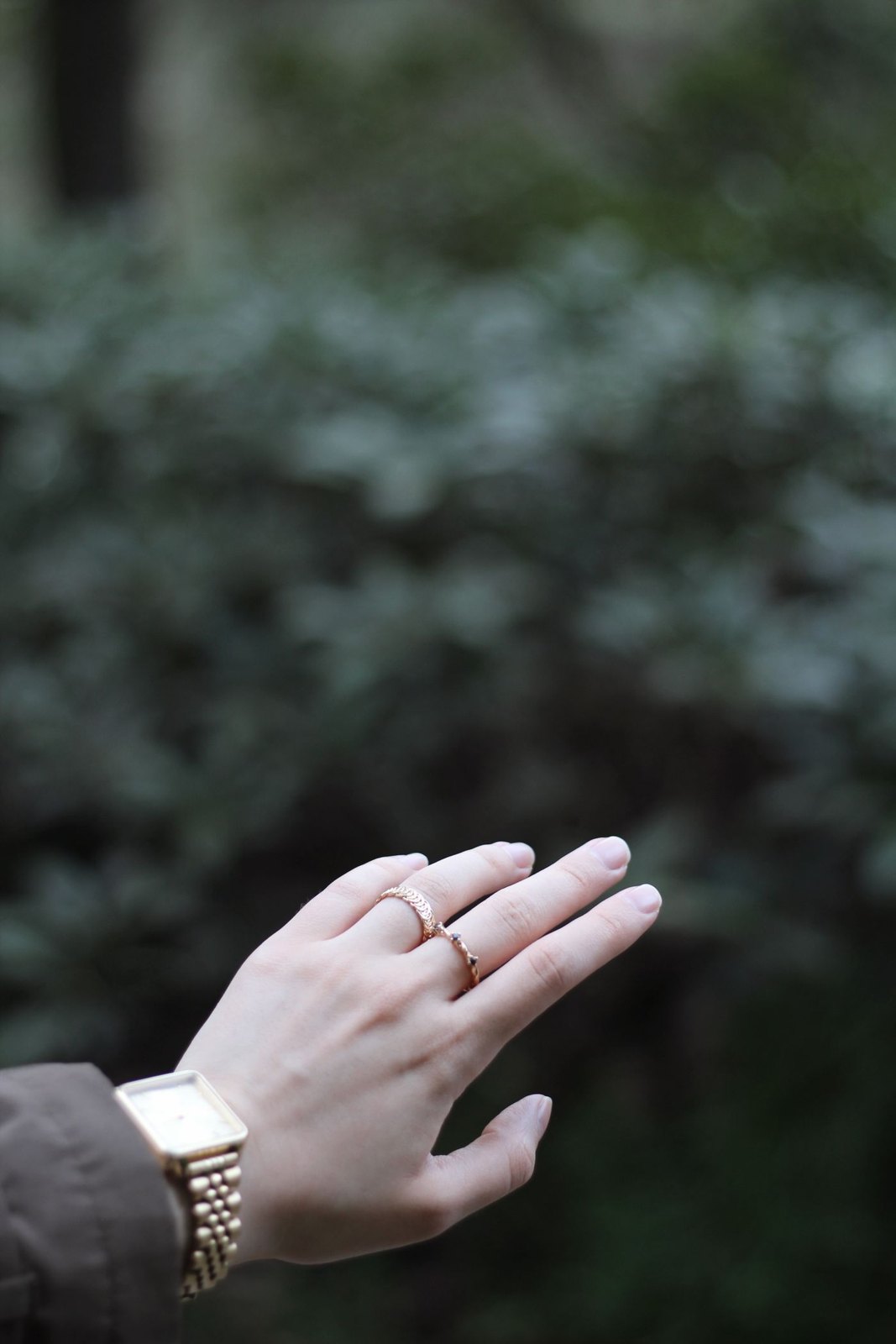
A ring arrangement looks different with your fingers relaxed than with your hand spread for a photograph. Put the rings on and let your hands fall naturally. Then type a few lines, hold a mug and close your hand loosely. Notice where neighbouring rings press against each other.
A wide band may feel different from a narrow one in the same nominal size. A tall setting can catch where a flatter design does not. These details matter more during a busy day than whether every finger appears evenly decorated.
Leave room between pieces
Try one ring on each hand before adding a stack. If two rings repeatedly knock together on adjacent fingers, move one or wear them separately. You do not have to distribute jewellery symmetrically. The hand you use most may benefit from a simpler arrangement.
Check whether stacked rings sit comfortably together. Shapes that appear to align may still rub at their edges. Precious stones, plated finishes and softer surfaces can need particular care; follow the maker's instructions rather than assuming that pieces are suitable for constant contact.
Plan where they go when removed
Some activities call for removing jewellery, depending on the task, workplace rules and the ring's construction. Keep a secure designated place for it. A small closed pouch is generally easier to account for than a loose ring beside a sink or on a desk crowded with papers.
Avoid making a habit of slipping rings into an open pocket. It is easy to forget they are there before changing clothes or doing laundry. If you remove a ring during the day, return it to the same secure place each time.
Choose fewer decisions
An everyday combination can be as small as one ring that does not demand repeated adjustment. Save delicate or prominent pieces for occasions when they suit the activities ahead. That is not a judgement about how much jewellery is appropriate; it is a way to keep the pieces you enjoy from becoming something you constantly have to manage.