Put the sleeve in its normal position
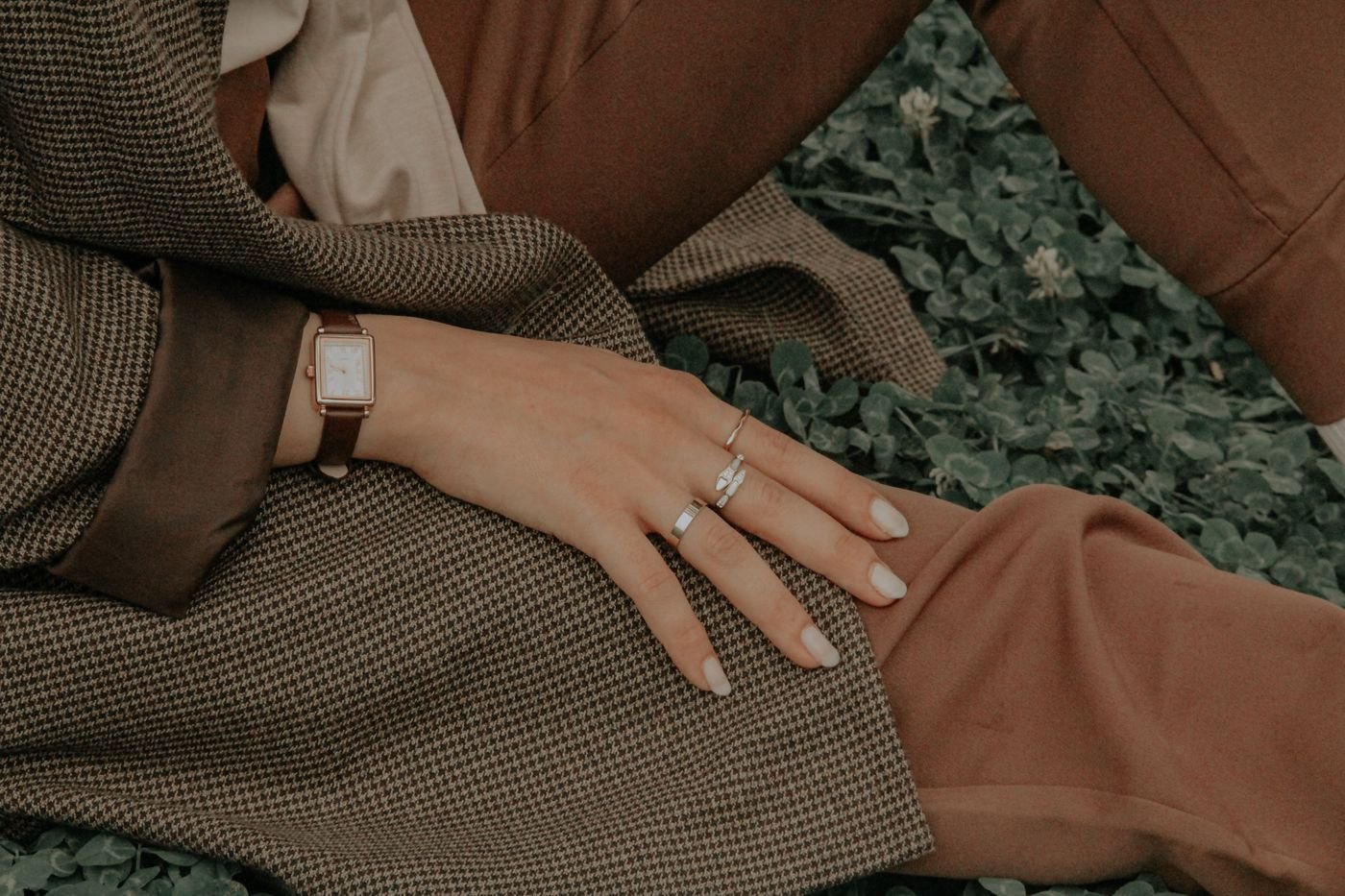
Try the bracelet after putting on your top. A fitted cuff, a loose shirt sleeve and a thick knit create different amounts of room at the wrist. Let the sleeve settle where it naturally falls rather than holding it back for the mirror.
If the bracelet disappears completely, decide whether that bothers you. Jewellery does not need to remain visible every moment. But if you want it to be part of the outfit's outline, choose a sleeve that ends higher or a bracelet that sits comfortably beyond the cuff.
Check contact and movement
Bend your wrist and reach forward. A rigid bangle may slide over the cuff, while a chain bracelet can become caught beneath it. Neither movement is automatically a problem, but repeated snagging or pinching is a reason to change the combination.
Look for catches, charms and textured edges beside delicate fabrics. A piece that works with a smooth shirt may be less suitable against a loose knit. Avoid forcing a bracelet over a thick sleeve if the closure or fit was not designed for it.
Consider the rest of the day
At a desk, a large bracelet can rest against the keyboard or tabletop. Try the working position before leaving home, particularly if the surface or jewellery is easily marked. A bracelet on the other wrist or a smaller piece may be more comfortable.
Outer layers add another cuff. Put your coat on and off to see whether the jewellery catches at the lining or sleeve opening. If it does, choosing a simpler piece can be easier than carefully guiding it through every time.
Keep the arrangement readable
When several bracelets share the wrist, notice the combined width rather than assessing each individually. A small stack can become bulky beside a substantial cuff. Remove one piece and compare the space that remains. The sleeve and jewellery can both contribute without competing for exactly the same few centimetres.