Start from the bed
Lie or sit in the position from which you usually reach the table. Can you switch on the lamp, put down glasses or find a drink without stretching awkwardly? A beautiful arrangement viewed from the doorway may not work from the pillow. Test the reach before deciding where anything belongs.
The table's height matters too. If it is much lower or higher than the mattress, use its most accessible part for the items you need most often. Do not place a glass at an unstable edge just to preserve a decorative grouping.
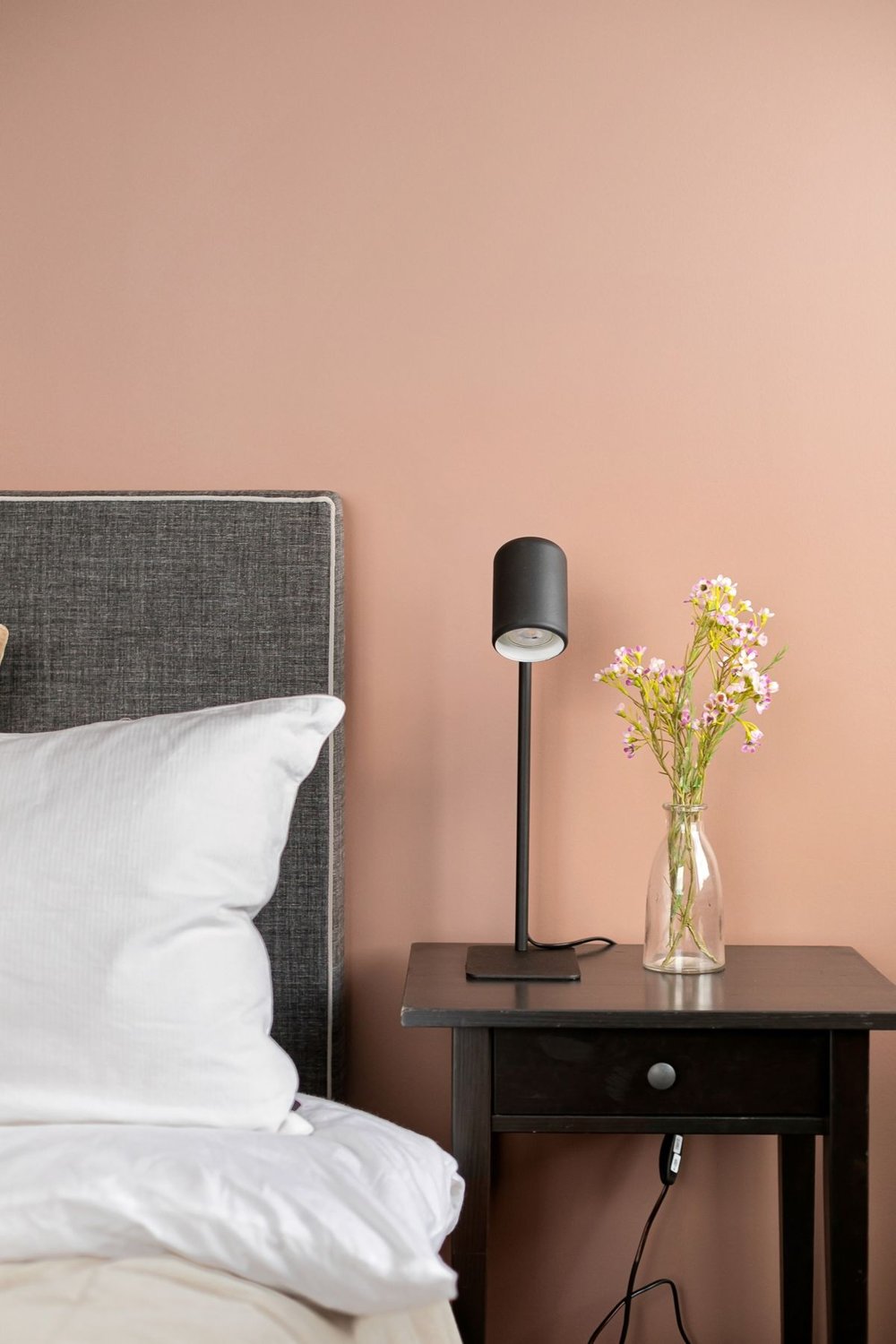
Choose a small night-time collection
Remove everything and return only what you use beside the bed. A book, glasses and a lamp may be enough. A week's worth of cups, receipts and several unfinished books can move elsewhere. This is not a rule against belongings; it is a way of making the few things you need easier to find in low light.
If the table has a drawer, use it for an appropriate small group rather than treating it as a place to hide every object removed from the top. A divider can help keep small items from rolling together, but only after you know what belongs there.
Give charging a deliberate place
If you charge a phone nearby, follow the device and charger instructions and keep the arrangement on a suitable clear surface. Do not bury equipment under bedding. Route the cable so it is not pulled when you move the table or caught underfoot when you get up.
You may prefer charging elsewhere. In that case, choose how you will handle any function the phone currently provides, such as an alarm. The furniture arrangement should follow your actual preference rather than a rule about what a calm bedroom is supposed to contain.
Leave room for a temporary object
An empty patch is useful when you need to put down a tissue, a ring or another book. If every part of the surface has a permanent decoration, those small tasks become awkward. One picture or vase can be enough if you want it there; neither is required to make the table finished.
Check the lamp's base and shade against the available space. A very large base can leave nowhere to put a glass safely, while a poorly positioned shade may obstruct the view. Use lighting as intended and keep fabric clear of it according to its instructions.
Clear it during an existing task
When you change the sheets or bring a cup out of the room, glance at the table. Return borrowed items to their proper places and wipe the surface as appropriate for the material. A small arrangement is easy to restore without a separate tidying session. The bedside table works best when it quietly supports the beginning and end of the day.