Do not let a chair make the decision
A wool sweater often lands on a chair because it feels neither freshly clean nor ready for the laundry. That halfway place can work for a short pause, but it needs a purpose. Check the sweater after wearing it. Look at the cuffs, neckline and areas that have been in contact with food, skin products or a bag strap. Decide whether it needs cleaning or simply a chance to rest before being put away.
Woolmark notes that wool can need less frequent washing than some other fibres, but the condition of the actual garment still matters. A fixed number of wears does not account for weather, activity or how it was layered. Do not use airing as a way to ignore a stain or a persistent smell.
Give airing a defined place
Choose a clean, ventilated area where the garment will not be crushed or exposed to something that could mark it. Support a knit rather than stretching it over a narrow hook. Follow the manufacturer's care advice about heat and drying; placing it close to a heater is not a substitute for patience.
Make the temporary spot easy to clear. One sweater laid carefully over an appropriate surface is manageable. A growing pile of coats, bags and knits is harder to inspect, and the lowest item may never receive the airing you intended. If you share the space, explain which items are waiting to be put away and which need cleaning.
Before returning the sweater to the wardrobe, check it again. Is it dry? Does it need attention at a cuff? Are there crumbs or lint to remove with a method suitable for the fabric? Treat these as separate small decisions instead of automatically adding a scented spray. Fragrance can change the smell of a garment without addressing the reason it needs cleaning.
Follow the garment when washing becomes necessary
Read the label before choosing hand washing, a machine programme or professional care. Wool garments vary in construction and treatment. The fibre name alone does not give permission for a particular process. Use the manufacturer's instructions for the garment and the detergent, and ask for advice if the label has disappeared or is unclear.
Plan the drying space before starting. Woolmark's drying guidance describes supporting suitable wool garments flat unless their care instructions allow another method. Do not wash several heavy sweaters together if you cannot give them the required space afterwards. A wet garment waiting in a heap is not the result you were aiming for.
Put it back ready for the next wear
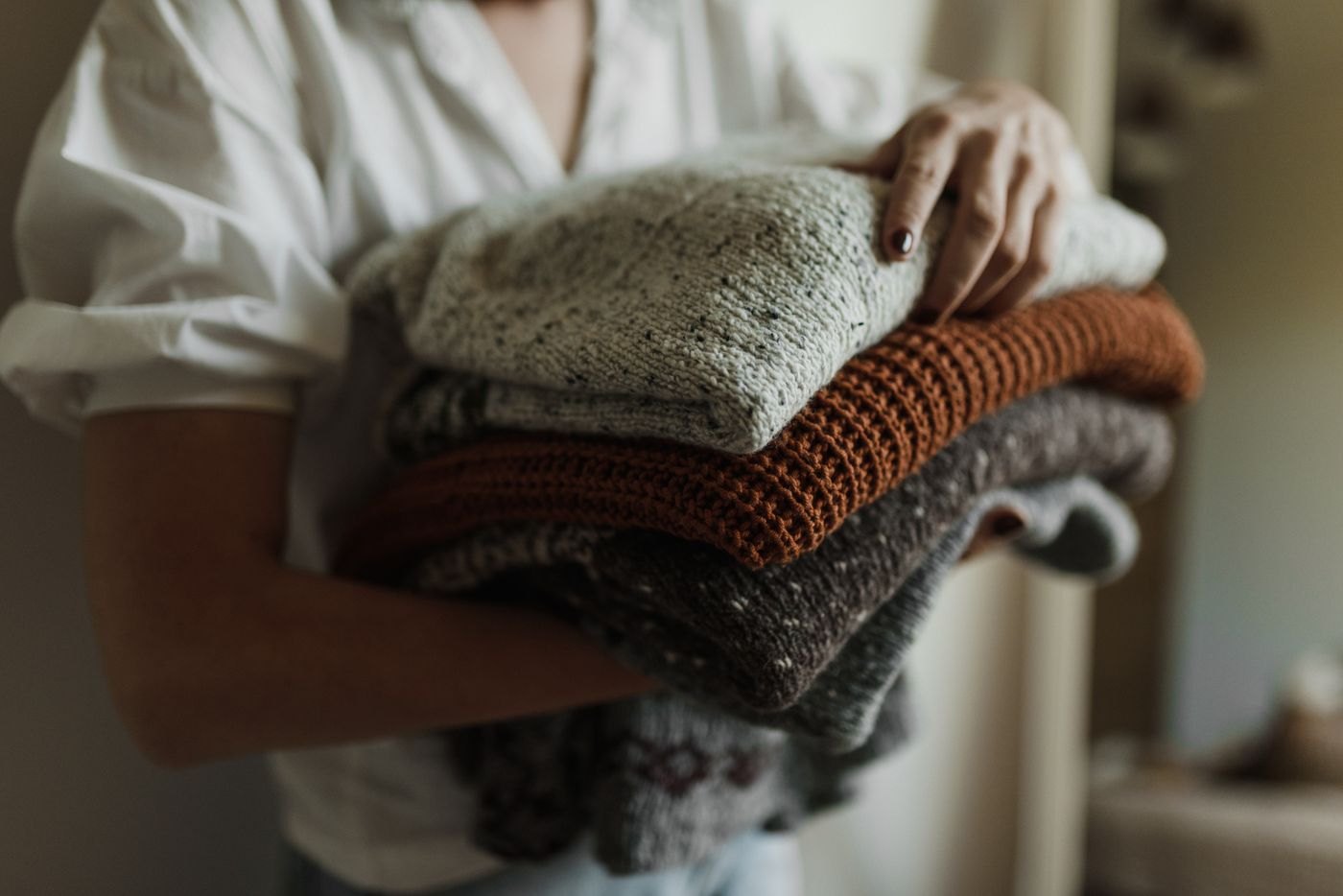
Fold the sweater where you can see it without dragging it from beneath a tall pile. If the season is ending, clean it according to its instructions before long-term storage rather than postponing the job until autumn. Keep a repair note with anything that cannot yet return to use.
The routine can remain modest: inspect, give it the care it needs, then put it away. That small sequence prevents the chair from becoming a permanent second wardrobe and makes the next morning's choice more reliable.