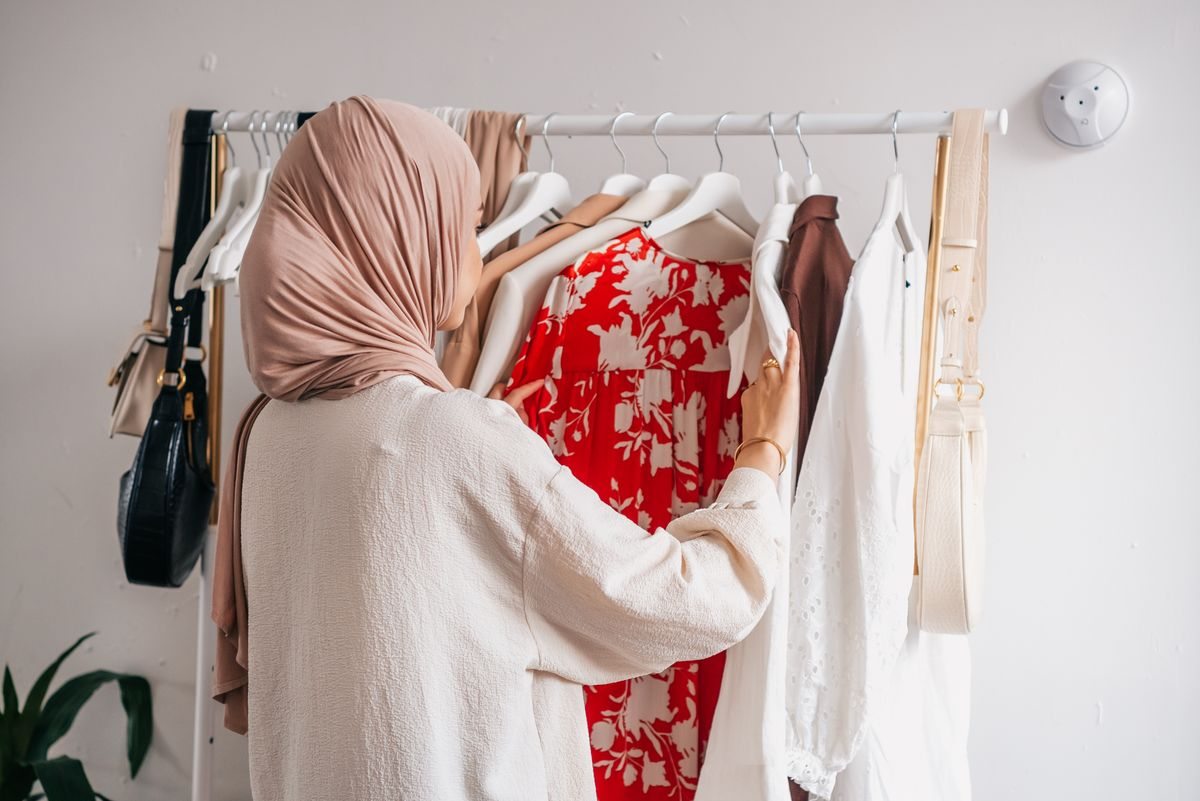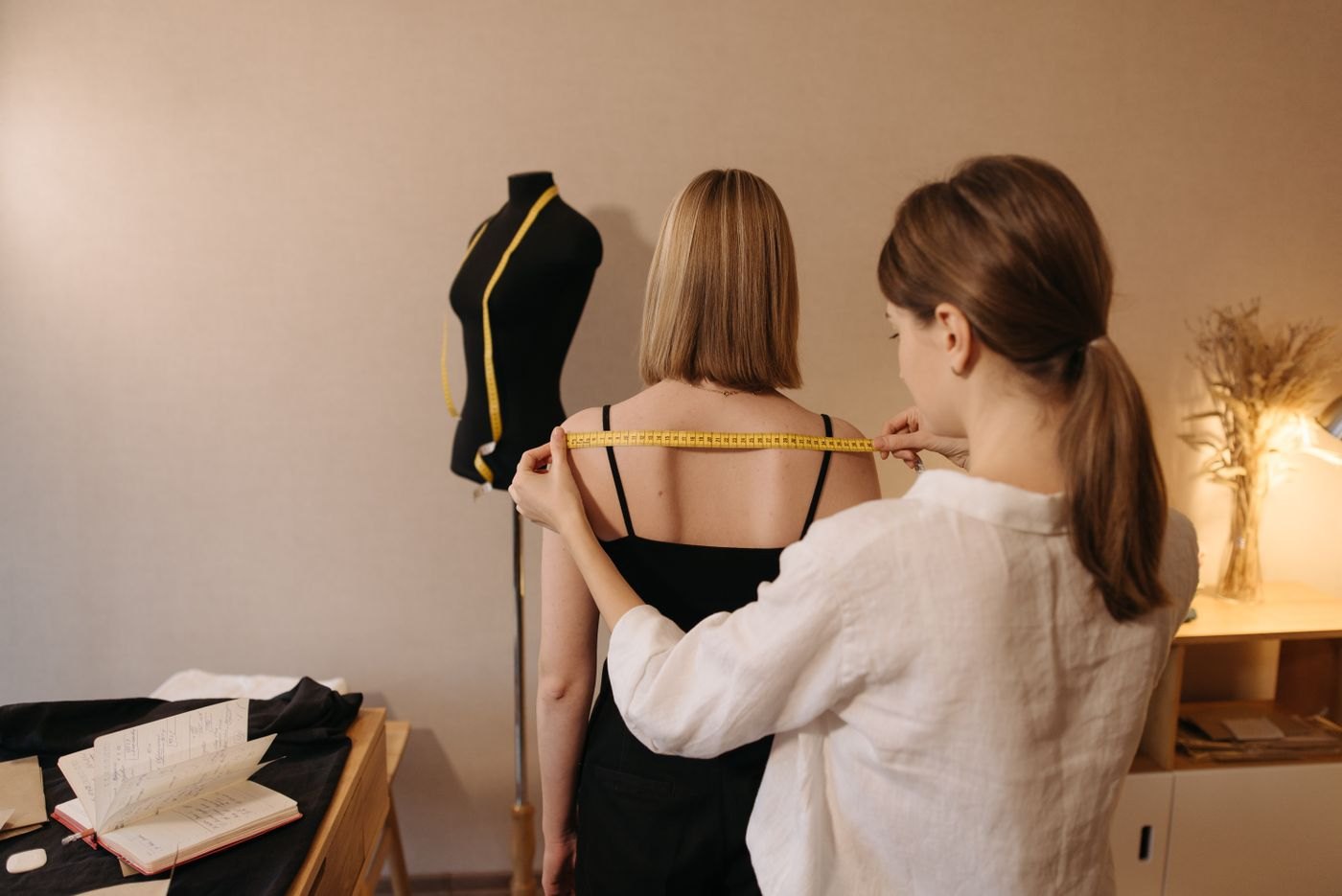
Bring the outfit into the appointment
Wear or bring the shoes and underlayers that affect the alteration. Trouser length changes with the shoes beneath it; a jacket fits differently over a fine top and a thick knit. If a dress will be worn with a particular bra or slip, include it in the fitting rather than asking the tailor to imagine the effect.
Explain the problem in ordinary terms. “The waistband feels loose when I walk” or “The sleeve covers my hand” gives the professional something to assess. You do not need to prescribe the sewing method. There may be more than one way to achieve the result, and some changes affect other parts of the garment.
Ask what the change involves
Before agreeing, ask whether the desired alteration is feasible and what trade-offs it creates. Shortening a sleeve with working cuff details can be different from shortening a plain sleeve. Changing one seam may move a pocket or alter the line of a pattern. Ask what will remain visible and whether the original finish can be retained.
Discuss the cost and timing clearly. Find out whether the quote includes an additional fitting and what happens if further adjustment is needed. If the garment is for a particular date, say so at the beginning. A professional should be able to tell you whether the schedule is realistic without your assuming that every job is quick.
Ask whether the work is reversible before relying on that possibility. Once fabric has been cut away, future options can be limited. If you are uncertain about a length, it may be worth checking a pinned version carefully from several angles before proceeding.
Agree on the result in concrete terms
A request such as “make it more fitted” can mean several different things. You may want less fabric at the waist while keeping room through the shoulders, or you may mainly dislike how the front hangs open. Explain the effect you want and ask the tailor to show which areas would change. A photograph of the garment as you currently wear it can help explain the problem, but an inspiration image cannot guarantee that a different construction can be made identical.
If several changes are proposed, ask how they interact. Taking in a garment can alter the way a hem falls or the position of a pocket. It may make sense to establish one adjustment before finalising another. Let the professional explain the order of work rather than treating the quote as a list of unrelated tasks.
For a trouser hem, agree on the shoe pairing and the desired finish. Ask whether the original hem can be preserved where that matters, what a replacement finish would look like and whether the turn-up or pattern limits the options. For a sleeve, discuss how buttons and vents will be placed after shortening. These details are easier to settle at the fitting than after the fabric is cut.
If you have more than one garment, identify each job clearly and make sure the collection date applies to the items you need. Keep the receipt or written description of the agreed work. That is useful for remembering the decision, not a substitute for discussing uncertainty in person. If the pinned version still does not look right to you, say so before approving the next step.
When the proposed work becomes extensive, ask whether a different garment would be a more sensible starting point. A tailor may be able to explain that the desired silhouette depends on construction that cannot be recreated through a small alteration. Knowing that limit is part of a useful appointment. It helps you choose where to spend effort without expecting the professional to turn every original cut into every possible new shape.
Move in the pinned garment
Stand naturally and check sitting, reaching or walking as appropriate, following the tailor's direction around pins. Do not hold a flattering pose that you cannot maintain through ordinary wear. Explain if the pinned version feels restrictive even when it looks neat in the mirror.
At collection, try the garment before leaving if possible. Check the altered area, the overall balance and the movement that originally caused difficulty. Bring the same shoes again for a hem check. Keep any returned spare fabric or buttons with the garment's details if they may be useful later.
An appointment is also a chance to hear that a proposed change is not worthwhile. That answer can save you from spending money on a garment whose underlying cut does not suit the result you want.