Make ownership visible
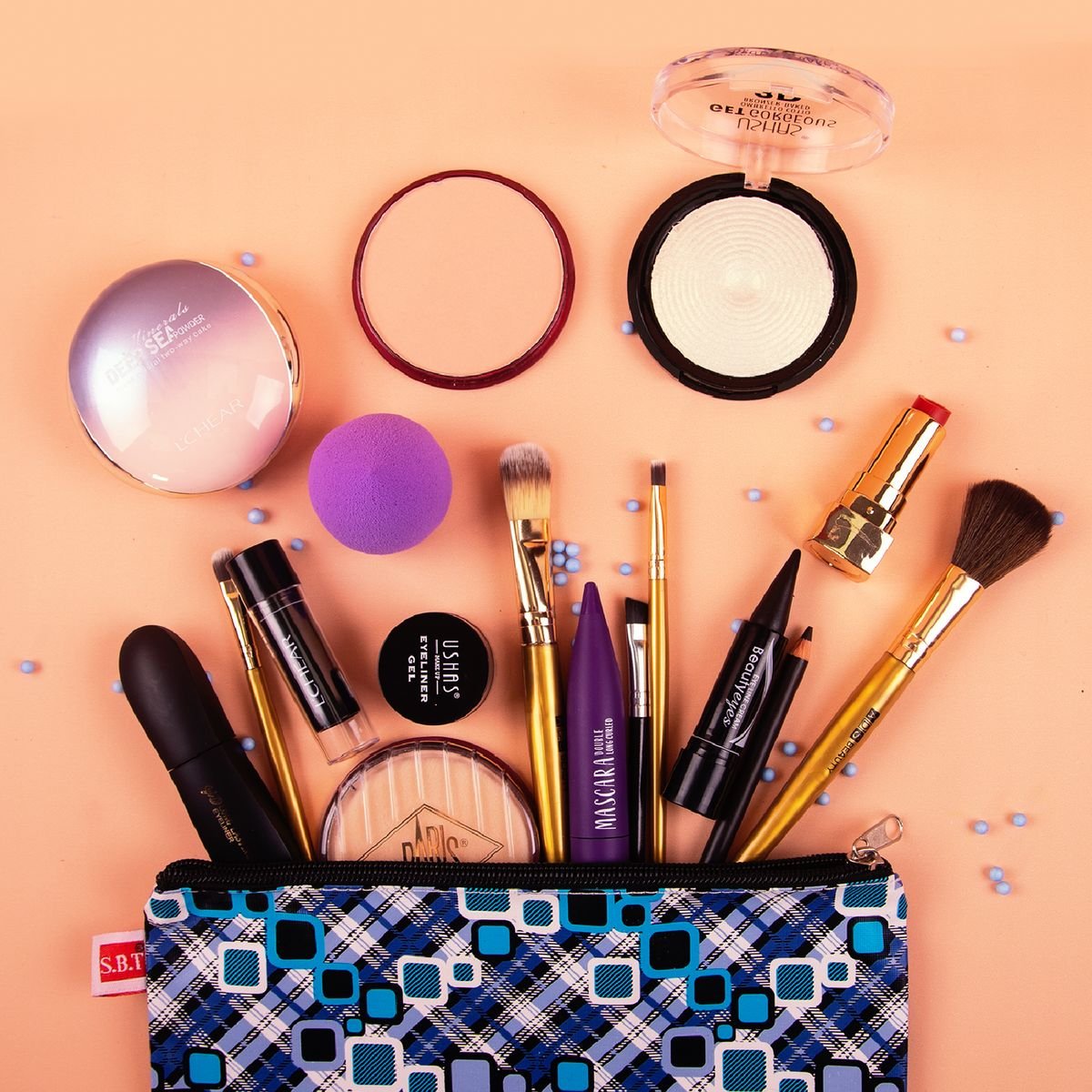
In a shared bathroom, similar tools can become mixed without anyone deliberately borrowing them. Give each person a separate container or pouch and keep it in a consistent place. A small name label is clearer than remembering which of two black mascara tubes belongs to whom.
The American Academy of Dermatology advises against sharing makeup that touches skin and the brushes or sponges used to apply it. Build the arrangement around that boundary. A tidy tray holding everyone's tools together can look attractive while making the distinction harder to maintain.
Share the space, not the applicator
A mirror, shelf and clear counter can be communal without the personal tools becoming communal. Leave enough space for each person to put down their own items while getting ready. If storage is limited, a portable pouch that leaves the bathroom afterwards may work better than several crowded cups around the basin.
Keep clean and used tools separate within your own routine. A brush waiting to be washed should not sit among the ones ready for use. Choose a simple temporary place that cannot be mistaken for the clean container, then complete the cleaning rather than allowing that pile to grow.
Plan for guests
If someone forgets a cosmetic, you do not have to solve the problem by lending a used eye product or applicator. They can skip the step, use their own alternative or obtain a new item. An unopened spare is only useful when it suits the person and the product's directions; it should not become pressure to use makeup they did not want.
For a group getting ready together, clear surface space ahead of time. Ask everyone to keep products in their own bag and return them after use. Good lighting and an extra mirror are more helpful things to share than a wand passed from one person to the next.
Be direct without making it awkward
A short explanation usually works: these are my personal tools; there is space for yours beside them. You do not need to turn the conversation into a judgement about someone else's habits. Apply the same rule to yourself when you are getting ready at another person's home.
If tools have been mixed, stop and identify what belongs to whom. Follow appropriate cleaning and replacement guidance instead of putting everything back and hoping the problem resolves itself. Where a product cannot be safely restored under its instructions, replacing it is the clearer option.
Keep the arrangement easy to maintain
Inspect the storage during an ordinary tidy rather than scheduling a large overhaul. Remove empty packaging and return stray items to their owner. When each person can lift out a small collection in one movement, the counter is easier to clean and the tools are less likely to wander. The system succeeds when the distinction remains obvious even on a hurried morning.