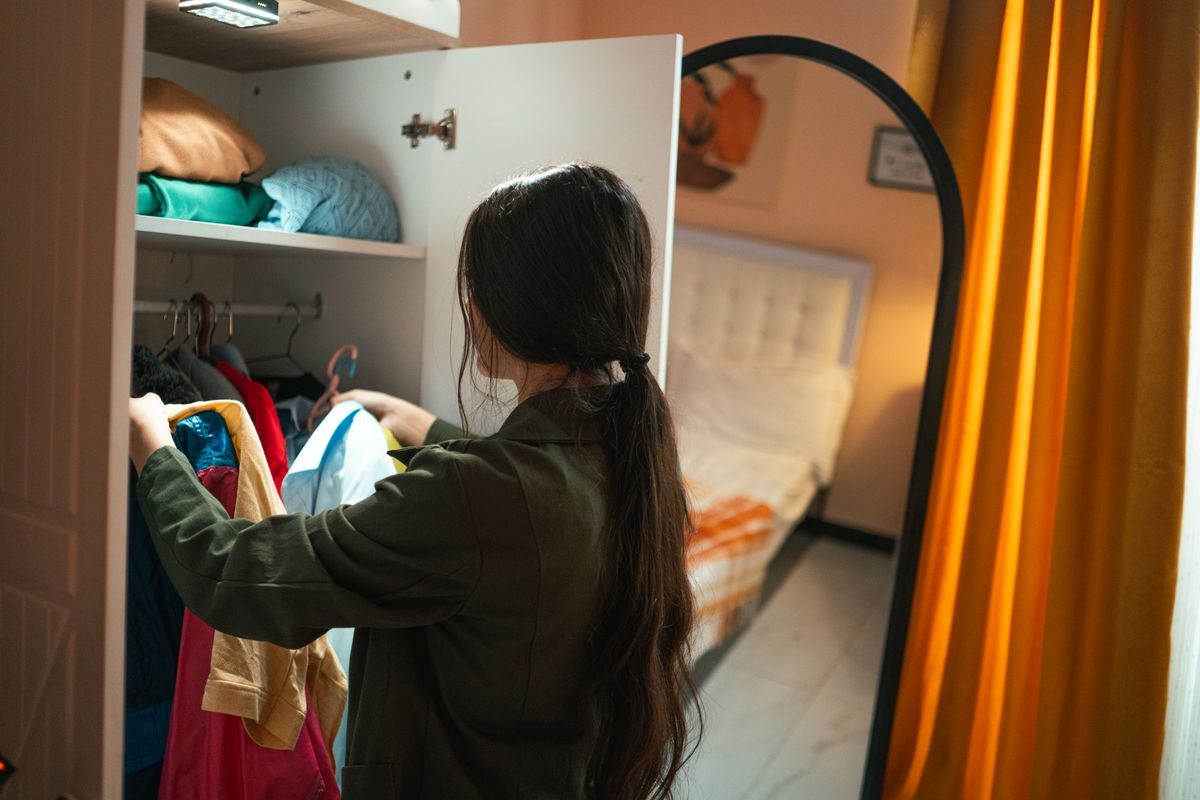
Start with the overlap
The change between seasons rarely happens on one convenient day. Keep the layers that bridge both kinds of weather available: a lighter jumper, a jacket that fits over it and trousers you can wear with different shoes. Moving every warm item out at once can create a frustrating search when the temperature drops again.
Check the coming weeks rather than planning an entire season in detail. Work, travel and events may require a few pieces that do not match the general weather. Leave those accessible. A seasonal wardrobe is still there to serve the days you actually have.
Open one container
Take out a manageable group and inspect it before putting it on the rail. Look for marks, loose fastenings and anything that needs freshening according to its care instructions. Stored clothes are not automatically ready to wear simply because they were ready last year.
Try on items whose fit is uncertain. There is little value in giving the front of the wardrobe to trousers you cannot comfortably sit in. Keep the current season's workable pieces in place until their replacements are ready; this prevents the changeover from leaving you with fewer options for several days.
Send clean clothes into storage
Check the care label and condition of the clothes going away. Deal with stains and necessary repairs before packing, using the method appropriate for each item. Do not seal anything away while damp. Storage should be clean, dry and suitable for the fabric, with heavier pieces arranged so they do not flatten delicate ones.
Label a container by what it holds rather than by an idealised season. Light dresses or thick knitwear tells you more than summer or winter when you need one item unexpectedly. Leave a short inventory if the contents are not visible, but keep it simple enough that you will update it.
Make a separate plan for shoes and coats
Footwear often changes at a different pace from the clothes above it. Keep a pair for rain accessible even when lighter shoes move to the front. Inspect soles, fastenings and linings before storing or returning a pair to use. If a repair needs a professional, allow time for that work instead of discovering the problem on the first wet morning.
Clean footwear using instructions appropriate to its material and let it dry fully before storage. Avoid placing a heavy pair directly on top of a softer one. A clear label or a photograph on the box can make an occasional pair easier to retrieve without opening a whole stack.
Coats deserve a similar transition period. The light coat may be useful in the afternoon while a warmer layer still serves an early commute. Hang the ones currently in rotation with enough space for them to dry after use. Do not pack a damp coat away simply because you planned to finish the changeover that day.
Accessories can stay in a small transitional group: a scarf, a compact umbrella and the headwear you actually use. Check those objects too. An umbrella with a broken mechanism and gloves missing their partner should not move through another season as though they are ready. These small inspections turn a storage exercise into preparation for getting dressed.
Rebuild around a few outfits
Once the next group is in place, assemble several combinations from it. This reveals missing layers, unsuitable shoes or a jacket that no longer works with the trousers you wear most. The result is a useful shopping or repair note, rather than a general feeling that the season requires everything new.
Stop when the wardrobe supports the next stretch of weather. You can move another group later. A gradual switch may look less dramatic than an empty rail followed by a reveal, but it leaves the room usable throughout the process.