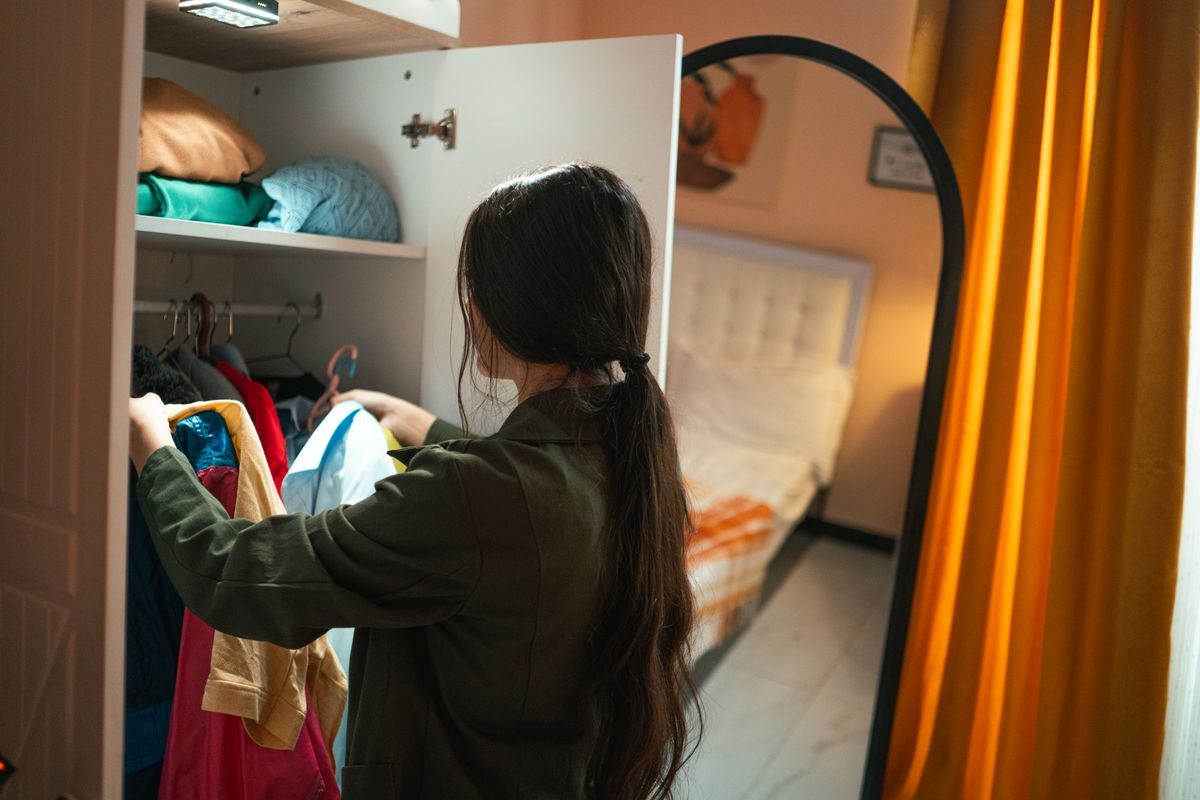
Choose what is genuinely leaving rotation
Do not pack by calendar alone. Keep enough clothing accessible for the weather you actually encounter, including a familiar extra layer. A seasonal box should free useful space rather than force you to reopen it after the next cool evening.
Lay out the pieces leaving the wardrobe and inspect them before folding. Empty pockets, check fastenings and identify anything needing cleaning or repair. A missing button is easier to handle while you remember how the garment is worn than months later when it returns in a hurry.
Finish care before closing the box
Clean each item according to its instructions and make sure it is fully dry before storing it. Woolmark specifically advises cleaning wool before storage and checking it periodically for moisture or insects. Apply the relevant maker's advice to other materials rather than assuming a single storage method suits everything.
Keep unresolved repairs apart with a written action and a realistic date. “Repair later” can survive several seasons without becoming a task. “Ask the alterations shop about the coat lining this week” gives you something you can do. If you no longer want the garment enough to repair it, make that decision before giving it another year of space.
Match the container to the contents
A container should fit the available place and protect the items without crushing them. Avoid overpacking simply because the lid can be forced shut. Delicate shapes and structured pieces may need different support from T-shirts. Consult garment-specific advice where compression or folding could be a problem.
Choose a clean, dry storage location and keep the box accessible enough to inspect. A hard-to-reach space may seem efficient until it makes checking or retrieving one piece impractical. Do not rely on fragrance to make a damp or unsuitable storage location acceptable.
Label the contents in terms you will recognise. “Heavy knits and winter scarves” is more informative than “clothes.” Put a short list inside or take a photograph before closing the container. You do not need an elaborate inventory, but enough information to avoid unpacking three boxes for one cardigan.
A box for a changeable season
For the weeks between seasons, make a small accessible group instead of reopening the whole winter collection. Choose the pieces most likely to bridge the weather: perhaps one fine knit, a familiar jacket and a scarf. Keep them in ordinary rotation while the heavier items go away. This is a use-based decision, so there is no fixed number that suits every home or climate.
A box can also be divided by purpose rather than by garment type. If you have a set of clothes used together for cold-weather walking, keeping that group identifiable may help more than storing every top beside every other top. Check that the materials can share the chosen storage conditions and separate anything whose hardware could damage a neighbouring piece.
For a shared storage area, label ownership as well as contents. Make the label readable from the direction the box faces on the shelf. A detailed list hidden underneath does not help you choose which container to take down. If the box is heavy, reduce the contents rather than making retrieval a balancing exercise.
At the next changeover, use the label as a question rather than a command. Do you still need everything in that category? Has the activity or wardrobe changed? Remove items that no longer belong before packing the group again. This keeps seasonal storage connected to current life instead of turning it into a record of every previous version of the wardrobe.
Make reopening a small job
Pack the items most likely to be needed first near the top where the arrangement allows. Keep accessories with the clothes they support if that helps, while separating hardware or surfaces that could catch or mark fabric. A detachable belt should remain identifiable with its garment.
When the season changes again, inspect the contents before putting them straight into daily use. Check condition, fit and whether the clothes still serve your week. The fact that something spent a season in storage does not oblige you to keep storing it.
Return only what you expect to wear to the active wardrobe. If the box comes back nearly untouched year after year, its contents may need an edit rather than a better label. Seasonal storage works when it preserves useful clothes between periods of use, not when it hides decisions indefinitely.