Look at the space before the basket
A washing machine can finish a load long before your home is ready to dry it. Check the available rack, line or other permitted drying space first. If yesterday's clothes still occupy it, another load may create a queue of damp fabric rather than a completed job.
Read the garments' drying instructions and separate anything needing a particular arrangement. A flat-dry knit cannot simply take the place of a shirt on a hanger. Equally, the fact that a garment can be washed at home does not automatically permit tumble drying. Plan around the item with the most specific requirement rather than discovering it while unloading.
Make room for the whole garment
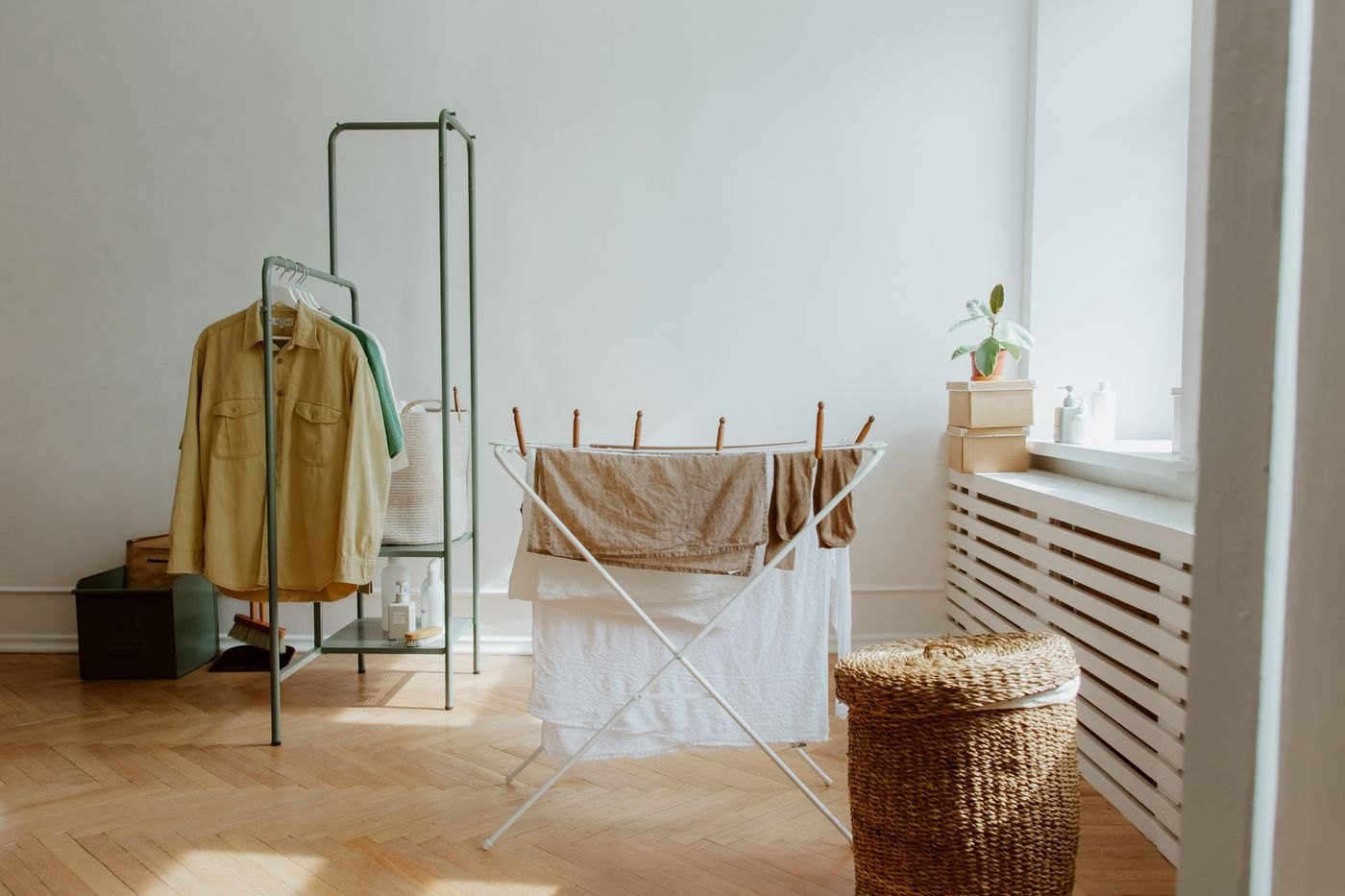
Arrange the space so pieces can follow their prescribed method without being crushed together. A rack covered with overlapping fabric can make it difficult to tell what is dry. Spread the work across smaller loads if the available area is limited. The useful measure is the amount you can finish, not the amount you can fit into the machine.
Choose a location that works with the home's ventilation and appliance instructions. Keep walkways clear and avoid balancing a rack where it could tip or block an exit. Do not drape garments over heaters or other equipment unless the manufacturer specifically permits that use. A convenient warm surface is not necessarily a drying surface.
For an outdoor line, consider the garment's instructions and the weather rather than treating sunlight as suitable for everything. Bring the load in when it is ready, and check seams, waistbands and other thicker areas rather than relying on a quick touch of the sleeve.
Keep the sequence manageable
If several items need different methods, unload deliberately. Put the separate-care pieces where they will not accidentally follow the rest into a dryer. A small note with the load can help when someone else takes over the task.
Leave enough time for the final step: putting fully dry clothes away. An indoor rack can become permanent storage when unloading it feels like another large job. Fold a few pieces as they finish if that suits the household, while keeping them separate from anything still damp.
Learn from the bottleneck
If the same problem returns every week, identify it precisely. Perhaps heavy items occupy the rack for too long, or the wash starts too late to use available outdoor space. Changing the day or splitting one load may help more than buying another rack that fills the room.
Keep urgent clothing needs visible in the plan. Wash the work shirt with time to dry by its permitted method rather than trying to rescue it late at night. The laundry is finished when the clothes are ready to wear again. Starting fewer items can be the more effective route to that point.