Choose visibility over a folding performance
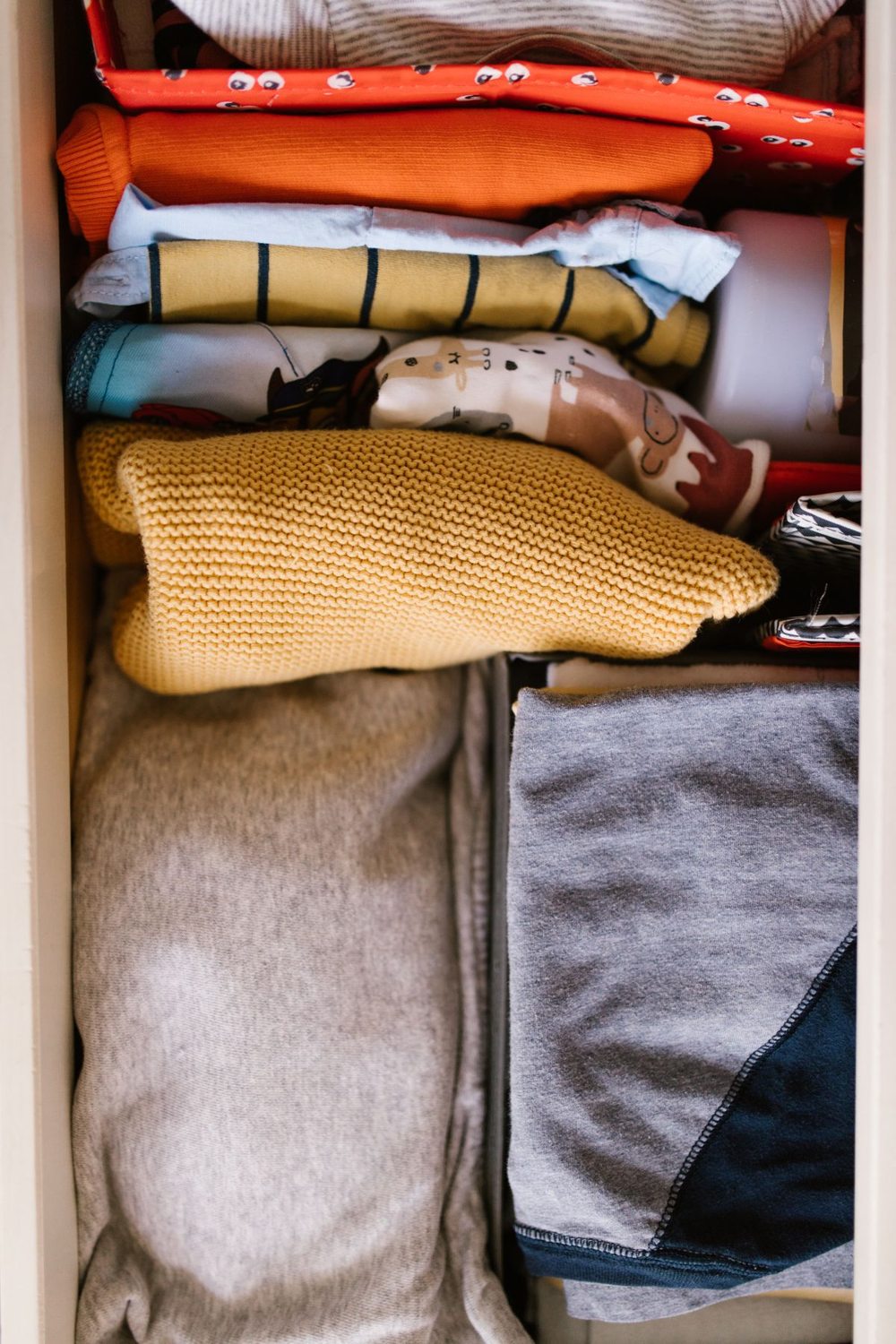
A deep stack makes the top item easy to reach and the bottom one easy to forget. For many everyday tops, placing folded pieces upright in a row lets you see more at once. This works only if the fabric and drawer depth support it; soft pieces that collapse may be better in a shallow stack or a simple divider.
Fold one garment and test the drawer before doing the entire collection. It should close without pressing hard on the clothes. A shape that looks neat on the bed may be too tall once it is inside the furniture.
Match the fold to the item
For a T-shirt, bring the sides inward to make a rectangle, then fold it to the height available. There is no universal number of folds. A thick top and a fine vest may need different arrangements. Avoid compressing bulky clothes so tightly that removing one releases the whole row.
Keep items with delicate embellishment, structured cups or a finish easily marked by folds out of a system that distorts them. Follow their care and storage needs. A drawer method is useful only while it respects the clothes it contains.
Leave a little working space
If every centimetre is packed, returning clean laundry becomes difficult and the arrangement soon breaks down. Leave room for your fingers to reach between pieces. The drawer should still work when the laundry basket is empty and all its usual contents are home.
Group by the distinction you actually use. Separating long and short sleeves may be more helpful than separating colours. Keep sleepwear or exercise clothes apart if you reach for them at different times; otherwise, avoid adding divisions simply because the drawer permits them.
Maintain the smallest habit
When a row starts collapsing, straighten it while putting the next clean item away. You do not need to refold every piece on a weekly schedule. If the same section repeatedly becomes untidy, change the arrangement there. A small stack may serve that fabric better than an upright row, and a drawer can comfortably contain both.