Look before the laundry basket
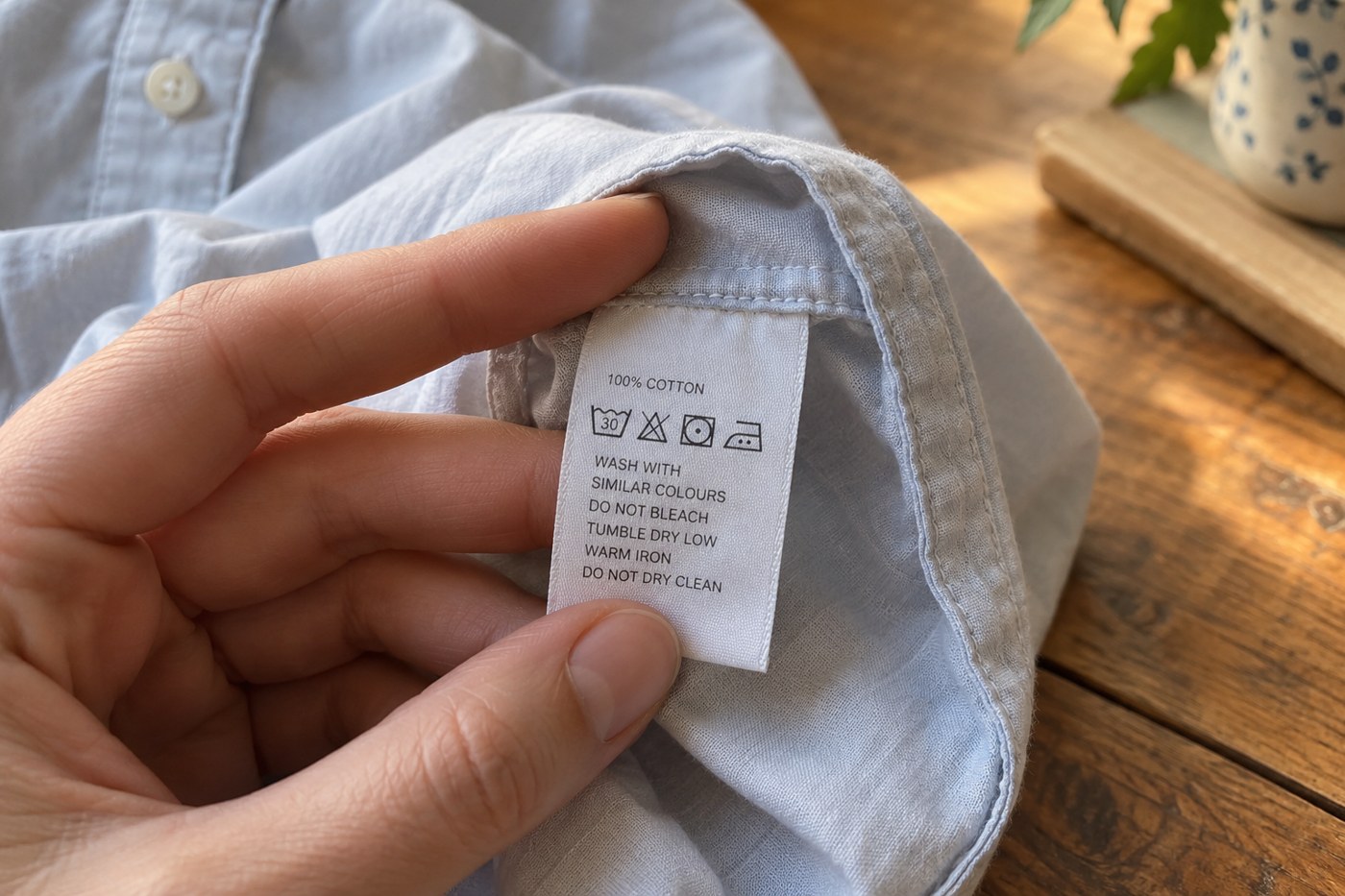
The care label is easiest to read while a garment is still dry and in your hands. Find it before the first wash and check all of its instructions, including any written notes. The fibre name alone does not describe the complete garment: a lining, trim, coating or construction detail can affect how it should be cared for.
GINETEX explains that its symbols describe the maximum permitted severity of treatment. A temperature or process shown is a limit within that system, not an instruction to use the most intensive option every time. If a symbol is unfamiliar, use the official explanation rather than guessing from its shape.
Follow the sequence through
Consider the whole process before starting. A garment that can be washed may still need a particular drying method, and that method may require space you do not have available today. Read ironing and professional-care instructions as well. Finishing is not a separate guess to make after the garment is clean.
Make a short note for anything easily confused with the ordinary wash. You might keep a photograph of the label with the garment's name, especially if the print is beginning to fade. Do not remove a label simply because you have photographed the fibre composition; make sure the care details and any written restrictions are also visible.
Make one garment-specific reminder
Imagine a dark blouse that looks at home in your usual load but has a separate drying requirement. The useful reminder is not simply “delicate.” Write the actual instruction in plain language, or save a clear image of the label with the blouse's name. Put the reminder where the decision happens, such as with the separate-care basket, rather than in a folder you will not open while unloading.
For a garment with several materials, photograph all the relevant information. The main fabric composition, lining composition and written care note may be on different parts of a folded label. Open it gently and make sure the photograph is legible. A blurry symbol preserved on a phone is only slightly more useful than an unreadable one inside a seam.
If the label irritates your skin, consider whether it can be repositioned or covered in a suitable way before removing it. If you do remove it, keep the complete label and identify the garment immediately. Do not rely on recognising a small white rectangle among several others later. Any alteration to a delicate seam should be approached carefully or discussed with a repair professional.
When another person handles the laundry, share the specific exception. “This blouse needs to stay out of the dryer” is easier to act on than “be careful with my clothes.” The same principle applies when taking something to a cleaner: mention the unusual trim or previous treatment rather than assuming it will be obvious. A clear instruction attached to a recognisable garment reduces guesswork without requiring a complicated household filing system.
When the instruction is unclear
Ask the manufacturer or retailer about a missing or ambiguous label, giving them the product details if you have them. A cleaner can also assess an unfamiliar garment, but cannot promise that every unknown fabric or finish will respond the same way. Avoid treating the care instructions on a similar-looking item as proof.
If a new garment's required care does not fit your routine, recognise that before buying another version. A beautiful item that waits indefinitely for specialist cleaning occupies a different place in the wardrobe from something ready for weekly use.
After cleaning, check the result before putting the item away. Notice whether it is fully dry, whether a mark remains and whether any fastening needs attention. Keeping the label in the decision from beginning to end reduces the number of improvised choices made when the garment is already wet, creased or needed in a hurry.